South Korea moves to expand naval presence near Strait of Hormuz
South Korea plans to extend its anti-piracy naval operations to waters near Oman to protect economic interests and respond to US pressure, amid rising tensions in the Strait of Hormuz.
By News Media House Staff ·
The South Korean defence ministry has announced plans to broaden the operational zone of its anti-piracy forces to waters significantly closer to the strategic Strait of Hormuz. This decision comes amid growing pressure from US President Donald Trump, who has urged his ally to provide more tangible support for the ongoing conflict with Iran. The government intends to submit a formal motion to parliament to authorize this expansion of the Cheonghae unit’s area of responsibility.
Under the proposed changes, the Cheonghae unit would be permitted to operate in waters near the port of Duqm in Oman. This location is situated approximately 650 kilometers, or 403 miles, from the Strait of Hormuz itself. For the plan to proceed, the motion must secure approval from both the National Assembly, President Lee Jae Myung, and the cabinet. A spokesperson for the defence ministry described the initiative as a necessary step to protect South Korean citizens and safeguard the nation's economic interests.
Officials emphasized that the reinforcement is strictly for non-combat purposes. The Cheonghae unit will operate independently of allied forces during these missions. To limit the scope of engagement, a ministry official speaking on condition of anonymity stated that operations would remain confined to the open waters south of Oman. Furthermore, maritime patrol aircraft assigned to the unit would be prohibited from targeting or monitoring Iranian territory, its territorial waters, or the interior of the strait.
The timing of the announcement coincides with recent incidents in the region. Iran’s Revolutionary Guard reported that two oil tankers and a tugboat caught fire in separate events after attempting to navigate the strait via unauthorised routes. One tanker struck a mine while crossing a passage south of the waterway, while another supertanker caught fire while exiting a route in the eastern part of the strait. A tugboat that approached the supertanker to assist in extinguishing the flames also caught fire.
Tensions between Seoul and Washington have risen in recent months. President Trump has criticized South Korea for what he characterized as insufficient support for the war effort in Iran. This diplomatic friction was further highlighted this summer when the United States scaled back major joint military drills with the South Korean armed forces, a move that created uncertainty among the US ally. The expansion of the Cheonghae unit’s mission is seen as a direct response to these pressures.
The Cheonghae unit has been stationed in the Gulf of Aden since 2009, primarily tasked with ensuring the safe navigation of commercial vessels in the region. The current deployment in the Middle East is set to expire at the end of 2026. The new motion also seeks to extend this deployment, confirming earlier reports by the Yonhap news agency. The expansion would allow the unit to maintain a longer-term presence in a critical area for global energy transport.
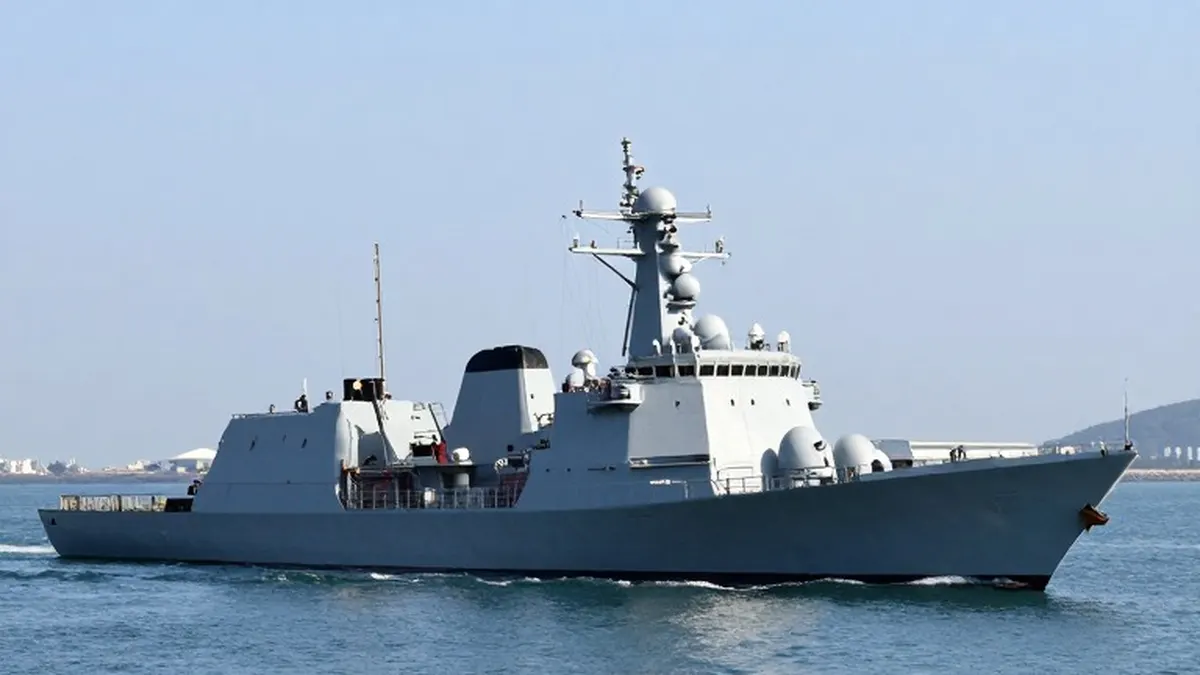
The unit currently consists of a 4,400-ton-class destroyer, a maritime operations helicopter, and up to three rigid-hull inflatable boats, crewed by approximately 300 service members. According to reports from the Korea Herald, South Korea would also deploy a P-8A maritime patrol aircraft and increase the unit’s total personnel by 75 to support the expanded mission. These additional assets would enhance the unit’s surveillance and response capabilities in the new operational zone.
South Korea’s dependency on imported energy makes the security of the Strait of Hormuz a matter of national priority. The industry ministry reported that the country sourced 70% of its oil supplies from the Middle East in 2025, with the majority of these shipments passing through the strait. This heavy reliance on the waterway underscores the economic stakes involved in the decision to expand naval operations closer to the region.
President Lee Jae Myung had previously outlined the administration's cautious approach to the conflict. On September 18, he stated that South Korea would not deploy military assets to the Middle East in a manner that could draw the country into direct conflict. However, he acknowledged that Seoul was reviewing ways to play a greater role in safeguarding navigation in the region, a stance that aligns with the current proposal to expand the Cheonghae unit's mandate.
Originally published by News Media House · Source: The Guardian