Auckland pilot flies float planes for Brad Pitt in new film
Nigel Griffith, an agricultural aviation specialist, stepped in when production crews struggled to source aircraft for Heart of the Beast.
By Noah Ross ·
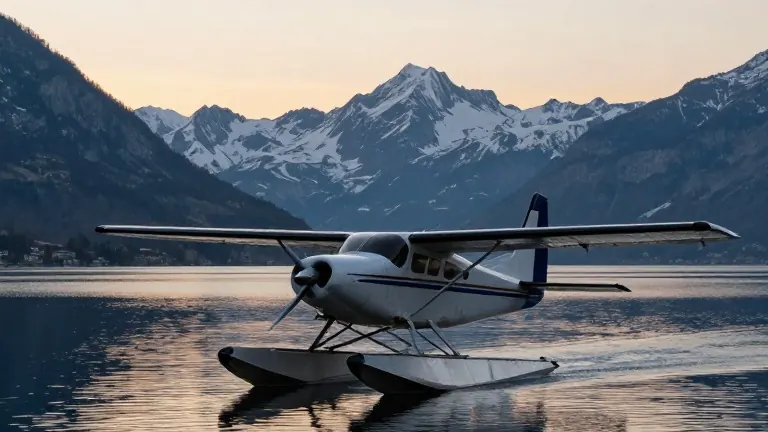
Nigel Griffith, a Blenheim-based agricultural aviation pilot, recently served as the flying double for Brad Pitt in the production of Heart of the Beast. The involvement began when Griffith received a call from a set director who was struggling to secure float planes. The crew feared they might need to import aircraft from overseas before Griffith offered two planes he had in his hangar, which he had originally planned to sell to a scrapyard.
Griffith, who chairs the Recreational Backcountry Pilots Association, kept the project under strict confidentiality. He was sworn to secrecy regarding the lead actor's identity from the start. It was not until he arrived in Auckland that the truth became clear. At Ardmore, a team of approximately 20 people measured him and confirmed his physical build matched Pitt’s. After confirming his willingness to take on the role, Griffith flew to New Zealand’s South Island to begin shooting.
The film is set in the Alaskan wilderness but was shot at locations including Queenstown, Glenorchy, Mount Aspiring National Park, and Milford Sound. The storyline follows a former Special Forces soldier and his military dog stranded in the wild. Griffith described the filming process as demanding, particularly during a sequence at Earnslaw Burn. He navigated the aircraft inside a volcanic amphitheatre, climbing to altitudes of six or seven thousand feet before descending through a valley beneath glaciers to execute a crash scene.
The crew required three takes of that specific shot due to a technical issue with the camera lens. Griffith noted that the float-equipped aircraft had limited performance, describing it as heavy and underwhelming. He stated that he earned his fee for the day due to the challenging flight conditions. While Pitt handled some of the flying himself after training with a colleague of Griffith, Griffith performed the complex maneuvers. A helicopter pilot coordinated the filming from above, adjusting his own altitude to match Griffith’s flight path rather than forcing the plane to descend.
Griffith praised the helicopter pilot’s skill, noting that the director would request lower angles, but the pilot achieved these by climbing instead. This approach simplified the coordination between the two aircraft. Griffith, who is accustomed to aerial top dressing, observed that the aviation work in the film was executed with high precision. He believes the final product will satisfy critical audiences who often scrutinize flying sequences in movies.
Following the shoot, Griffith sold one of the float planes to a farmer friend. He has returned to his regular work of aerial top dressing. He described his day-to-day job as challenging and rewarding, emphasizing the quality of the people he works for in the agricultural sector. The film remains in production, with Griffith’s work representing a key component of the aerial photography.
The collaboration between the pilot and the production team relied on clear communication and mutual respect. Griffith’s experience in agricultural aviation provided the technical stability needed for the film’s specific requirements. The use of local New Zealand aircraft and pilots helped the production avoid the logistical delays associated with international transport. Griffith’s contribution ensured that the flying scenes matched the physical capabilities of the lead actor.
Heart of the Beast continues its filming schedule in New Zealand. Griffith’s involvement highlights the use of local resources in major international productions. The aircraft used in the film are now back in commercial use, with one plane returning to aerial top dressing duties. The production maintains its focus on capturing the rugged environment of the South Island for the film’s narrative.
Source: The Star