Stadium operators explain why misting fans were left off during heatwave
Venue leaders say moisture on the turf posed a slipping risk for players, though staff and fans reported intense heat during the recent weekend.
By Anthony Hoffmann ·
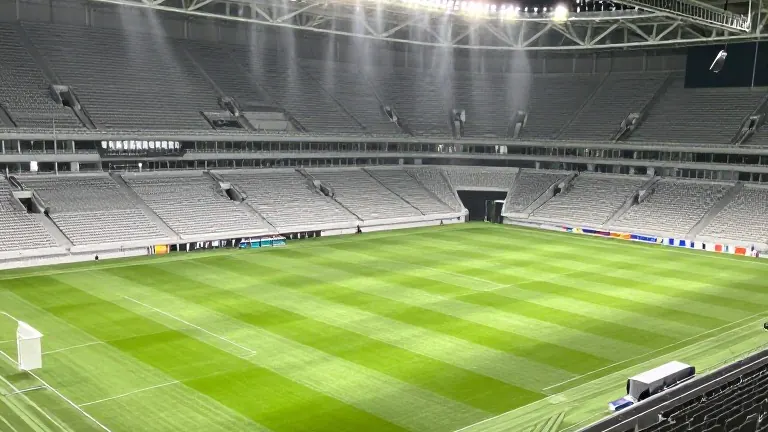
Caroline Harvie-Teare, the chief executive of Venues Ōtautahi, explained that misting fans capable of lowering temperatures by five degrees were not activated at One New Zealand Stadium during the recent long weekend. The decision was driven by a need to protect the playing surface, as operators feared that too much moisture would make the pitch slippery for athletes.
The issue arose during a sold-out National Provincial Championship final held on Monday afternoon. St John Ambulance treated six individuals for heat-related ailments after temperatures inside the closed arena climbed sharply. This marked the third consecutive day Christchurch experienced highs in the mid-to-late 20s Celsius, creating a challenging environment for spectators and staff alike.
Harvie-Teare acknowledged that the indoor climate was hotter than planned for an early afternoon kickoff. She noted that the ventilation system, which performed better on Sunday, did not function as expected on Monday despite strong winds outside. "It was in the hottest part of the day, and it felt hot in there. [Nobody] can tell me otherwise, it was hot," she told RNZ.
Overhead ceiling fans were also a point of discussion. Harvie-Teare clarified that these units are not designed to cool the air, but they do create a breeze that provides a noticeable difference in comfort. The venue plans to use misting fans more frequently for future events that do not involve turf sports, such as concerts, where protective coverings can be placed over the field.
Staff members working the long weekend described the conditions as extreme. One security guard said some spectators appeared faint, while another worker, who was not on duty that specific weekend, noted that temperature fluctuations were a major topic among employees. The venue is currently evaluating whether the heat levels indicate a design oversight in the $683 million facility.
To manage the risk, organizers of Monday's final implemented a water break in each half and extended the halftime period to 20 minutes. These measures aligned with World Rugby guidelines introduced last year, which require extended breaks when heat stress risk is classified as very high. Harvie-Teare said the team needs to conduct further analysis to determine if the current conditions match the original architectural intent.
Spectators who left the game offered mixed reactions. While many agreed the venue was hot, some felt the heat was manageable with proper clothing and hydration. The stadium faces another test of its cooling systems in the coming months when it hosts concerts by Robbie Williams and the Foo Fighters.
Source: The Star