Barrack: US Favors Syrian Control in Suwayda Dispute
The special envoy's comments signal a shift in Washington's stance, positioning the US against Israeli-backed factions in Syria's south.
By Noah Ross ·
US special envoy Tom Barrack stated on Friday that Washington prefers the Syrian government to maintain control over Suwayda rather than a faction led by Druze sheikh Hikmat al-Hijri. Barrack made the remarks during an interview with Mario Nawfal, an Australian social media personality, on the X platform. The comments offer a clear view of American policy in a region where the Syrian government has not fully reasserted its authority.
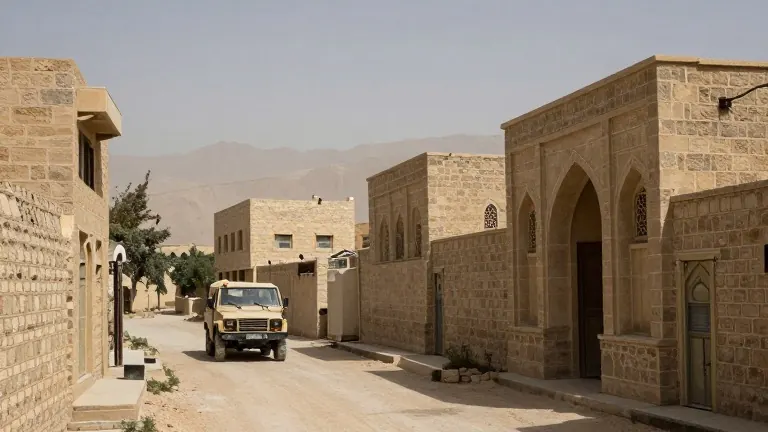
Suwayda is a southern governorate with a majority Druze population. It remains one of the few areas in Syria where the central government in Damascus does not exercise full control. The tension in the region has been driven by the National Guard, a Druze armed group linked to al-Hijri. Analysts have accused the group of receiving support from Israel and pursuing separatist goals.
Barrack, who also serves as the US ambassador to Turkiye, referred to al-Hijri as "a particular Druze sheikh" during the conversation. His choice of words is widely interpreted as a direct message to Israel. The US government seeks to align with President Ahmed al-Sharaa in Damascus, while Israel has maintained a separate track that involves supporting local groups opposed to the new Syrian leadership.
Navvar Saban, a researcher at the Arab Center for Contemporary Syrian Studies, told Al Jazeera that Barrack's message was unambiguous. Saban noted that Israel's backing of al-Hijri does not equate to American support. He explained that Washington has prioritized an agreement with Damascus, while Israel continues to pursue its own security demands and relationships in the region.
The divergence between Washington and Jerusalem has grown since the fall of former President Bashar al-Assad in December 2024. The US has worked to rebuild relations with the new Syrian administration. In contrast, Israeli Prime Minister Benjamin Netanyahu has maintained a different view of the post-Assad government. Israel has conducted military operations in southern Syria, including the seizure of land in Quneitra governorate and attacks on Syrian ministries.
Nanar Hawach, a Syrian analyst who visited Suwayda in September, said Barrack's remarks exposed the differences between the two allies. Hawach argued that Washington is building a partner in Damascus, while Israel appears to prefer a weaker Damascus that cannot assert itself in the south. He described Israel's strategy as using Suwayda as a lever against the central government.
The conflict in Suwayda escalated in July 2025 when fighting between Bedouin tribes and Druze residents turned into deadly sectarian killings. Government forces reportedly joined the Bedouin side, resulting in casualties that were overwhelmingly Druze. Israel intervened by attacking what it described as Syrian government forces entering the province. Since then, Israel has attempted to build relationships with locals, including al-Hijri, who remains a vocal opponent of the new leadership in Damascus.
Following the 2025 violence, the US, Syria, and Jordan signed a trilateral agreement in Amman in September 2025. The deal called for an independent international commission to investigate the events in Suwayda and ensure perpetrators were brought to justice. Despite the agreement, the region remains in a deadlock. Residents have expressed distrust of the government, citing pressure on their salaries, children's exams, and access to the capital.
Hawach noted that al-Hijri's authority rises when the community feels threatened but faces debate as that threat recedes. He observed that pressure from Damascus often strengthens the very leadership it aims to weaken. Saban added that a durable settlement requires credible accountability for the 2025 events. He stressed that the Druze community needs guarantees for movement, education, and security to rebuild trust in the state.
Source: Al Jazeera