Four Key Issues Define Israel's Vote
Candidates agree on war aims but clash on Haredi conscription, judicial power, and the post-October 7 inquiry.
By Beatriz Bailey ·
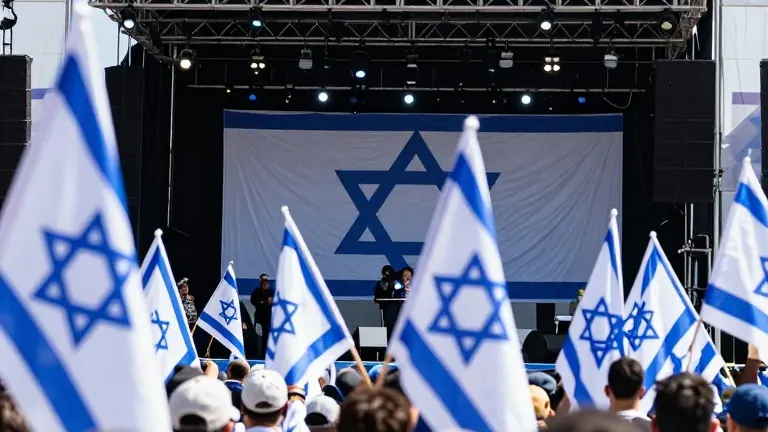
More than 74,000 people have been killed in Gaza, a figure that has remained absent from the campaign rhetoric of the two main political alliances in Israel. This omission defines the backdrop for Tuesday's election, which many observers consider the most consequential in the nation's recent history.
The leading contenders share a consensus on the external wars. None of the frontrunners has questioned the case for the conflict in Gaza following the Hamas-led attack of October 7, 2023, nor the subsequent war with Iran. However, most candidates for the premiership have not offered a clear path toward the two-state solution envisaged in the 1990s.
The division among voters centers on internal politics and the future character of the state. The choice lies between the hard-right government of incumbent Prime Minister Benjamin Netanyahu, which operates with limited judicial oversight, and a disparate coalition of opponents. The opposition promises a similar policy agenda but within legal confines and without the more extreme elements of the current governing coalition.
On the Palestinian issue, candidates have largely moved away from the commitments of the Oslo Accords. Netanyahu stated that there will be no Palestinian state because the land belongs to Israel. Gadi Eisenkot of the Yashar party called the principle of two states for two peoples a mistake. Finance Minister Bezalel Smotrich of the Religious Zionist party wants to cancel the Oslo Accords and encourage migration from the occupied territories.
Yair Golan of the Democrats party noted that Israeli society is still in trauma from October 7. He described a jump to a two-state solution as impossible, proposing instead a concept of civil separation and security responsibility.
The conscription of the ultra-Orthodox, or Haredi, population has become a central domestic issue. The human and economic costs of the wars have mounted as many Haredim refuse to serve. Netanyahu relies on the Shas and United Torah Judaism parties for Knesset support. These parties have insisted on legislation overturning a June 25, 2024, Supreme Court ruling to shield ultra-Orthodox youth from conscription.
After the arrest of about 40 Haredim for avoiding the draft this month, Netanyahu argued that preserving the world of Torah is essential. Shas leader Aryeh Deri stated that no government with his party's support would pass unless the status of yeshiva students was regulated. Eisenkot framed the election as a choice between Netanyahu's draft-dodging government and a government of conscription.
Avigdor Liberman of Yisrael Beiteinu called Netanyahu a hostage to draft evaders, claiming the prime minister has no government without them. The judicial overhaul initiated by Netanyahu's government in 2022 also remains a point of contention. The coalition has passed measures reshaping judge appointments and stripped Attorney General Gali Baharav-Miara of many powers.
These changes are due to take effect after the election, and most of the opposition has promised to reverse them. Justice Minister Yariv Levin calls the election a historic chance to finish the job. In contrast, Naftali Bennett of the Together alliance said his coalition would cancel all legal revolution laws immediately upon the convening of the Knesset.
Political accountability for the security failures of October 7 has dominated the election cycle. Inquiries led to the resignation of Chief of Staff Herzi Halevi in January 2025 and the departure of Shin Bet head Ronen Bar in June 2025. Recent reports suggest Netanyahu was warned by the UAE and Egypt before the attack, yet no formal inquiry into his specific failings has occurred.
Eisenkot said a state commission of inquiry will investigate the disaster and hold Netanyahu accountable. Netanyahu told the Knesset that his government wants an inquiry with broad public support, but the proposed government-led inquiry was deferred to the next session.
Source: Al Jazeera