Inside the chip talent war: Samsung fights to guard trade secrets as Chinese rivals close the gap
A prison sentence for a former Samsung engineer who joined China's CXMT highlights the intensifying battle over semiconductor expertise across Asia.
By News Media House Staff ·
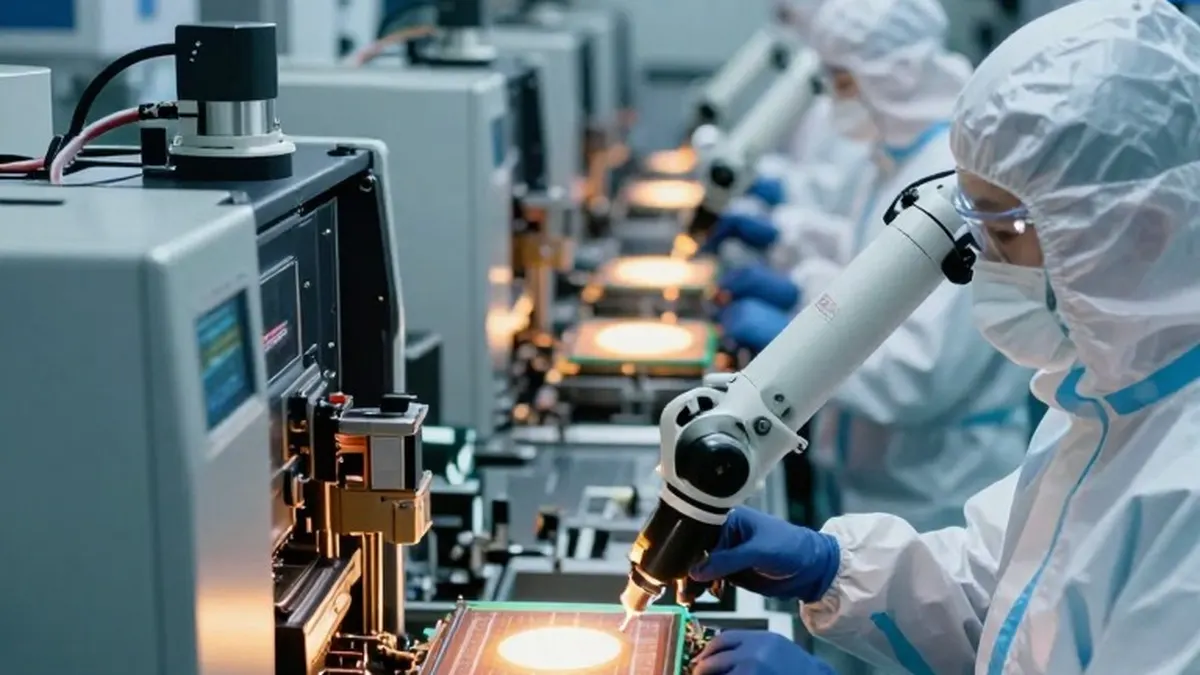
A former Samsung Electronics employee who later joined Chinese memory chipmaker ChangXin Memory Technologies, or CXMT, was sentenced to five years in prison by the Seoul High Court on Oct. 22 for leaking Samsung's technology, according to reports. The term was reduced from the seven years imposed at his first trial in April. He had joined CXMT in 2016.
The case underscores a widening struggle over semiconductor know-how, as Chinese chipmakers narrow the technology gap with established rivals and the race for top engineering talent collides with efforts to protect trade secrets.
Samsung has fought such battles before. In 2023, a South Korean court granted the company's request to block a former DRAM researcher from joining U.S. rival Micron, ruling that a two-year non-compete was not excessive and was necessary to protect Samsung's technology and business information, JoongAng Ilbo reported.
A decade ago, Chinese memory makers were not Samsung's biggest concern when experienced engineers departed. The company was more focused on staff leaving for established competitors such as SK Hynix and Micron, according to a former employee who asked not to be identified because the information was private. Samsung monitored where certain departing employees went and built two-year non-compete agreements into employment contracts, with senior engineers holding valuable technical expertise likely facing closer scrutiny. "It wasn't just about one employee leaving. The company wanted to send a message to those who stayed that moving to a competitor wouldn't be easy," the former employee said.
Chinese semiconductor companies have sought to close the technology gap by recruiting experienced overseas engineers with high salaries, stock options, housing and family support, according to Jeongku Choi, a senior analyst at Counterpoint Research. That expertise has helped Chinese chipmakers overcome technical bottlenecks, particularly as U.S. export restrictions have limited China's access to advanced chipmaking equipment, Choi said. Once viewed as unlikely to catch up with established players, Chinese manufacturers are now seen as "meaningful competitors," she added, and Counterpoint's Memory Tracker for the second quarter of 2026 projected CXMT's share of global DRAM revenue would reach 10%.
In response, established chipmakers are strengthening legal protections and internal security while adjusting compensation packages to retain key engineers, Choi said. South Korea has also designated certain semiconductor manufacturing technologies as "National Core Technologies," raising the penalties for unauthorized leaks. "I believe that this management of trade secrets will expand its scope even further to IP and legal areas once Chinese memory companies move beyond the Chinese market and begin to expand their exports," Choi said.
In Taiwan, home to the world's largest contract chipmaker TSMC, post-employment non-compete agreements are limited to two years and employers must compensate former employees at least half their average monthly salary during the restricted period, said Jamie J. Yang, a partner specializing in antitrust and intellectual property at Innovatus Law. Yang noted that the complexity of semiconductor manufacturing makes it hard for any single engineer to reproduce an entire production line elsewhere. "There is just very little chance that one person .. will know enough to replicate that line in any of the other companies," she said. Still, she expects movement between rival firms to increase modestly as competition for talent intensifies, alongside a likely rise in trade secret litigation.
In Singapore, protecting trade secrets can be especially difficult in the semiconductor industry because proprietary knowledge often involves intangible manufacturing techniques, and proving a competitor used them is hard when outsiders generally see only the final product, said Zechariah Chan, a partner at law firm Lee & Lee. "There is no bright line between an engineer's expertise and proprietary information," he said, adding that general skills stay with the engineer while trade secrets remain with the company. Singapore courts enforce non-compete clauses only if they protect legitimate business interests and are reasonable in scope, geographical area and duration.
Hong Kong courts take a similarly restrictive approach, enforcing non-competes only when they protect legitimate business interests and go no further than necessary, though they are more willing to protect trade secrets through injunctions, said Jezamine Fewins, head of litigation at Lewis Silkin in Hong Kong. "The difficulty is that often the trade secret is carried in the employee's head," she said, noting that information is more likely to qualify as a trade secret if disclosure to a competitor could significantly harm the former employer and the company has restricted access to it. For chipmakers, she said, the key is to clearly define what constitutes a trade secret, make employees aware of it and put safeguards in place.
Samsung and CXMT did not respond to CNBC's request for comment.
Originally published by News Media House · Source: CNBC
More News · National news · Report a business · Got a Story?