Israel Vote: 77% Turnout Leaves Both Camps Short of Majority
Netanyahu's bloc falls just shy of the 61-seat threshold, forcing coalition talks with parties that most Jewish opposition leaders initially rejected.
By Anthony Hoffmann ·

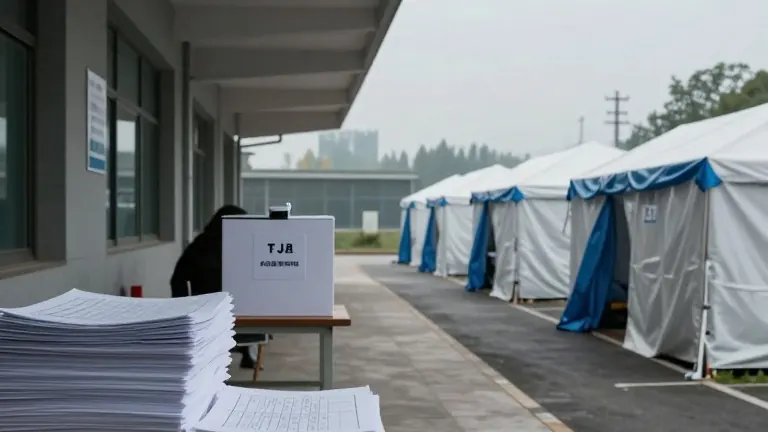
Israelis voted in high numbers on Tuesday, with turnout exceeding 77 percent, yet neither major political camp has secured the 61 seats required to control the 120-seat Knesset. Early results show Prime Minister Benjamin Netanyahu’s Likud party as the largest single force, but his alliance with ultra-nationalist and ultra-Orthodox groups appears to be slightly below the majority mark. Analysts caution that this early lead is skewed, as the first votes counted came from districts with strong right-wing support.
The voting patterns suggest a stalemate that many pollsters had predicted. Gadi Eisenkot, the former army chief leading the opposition, faces a similar hurdle. His coalition relies on parties led by Israel’s Arab minority to reach a governing majority. Arab voters, who make up one-fifth of the population, turned out in high numbers, a trend many saw as a direct challenge to the current government’s hardline stance. During the campaign, most Jewish opposition parties, including right-wing figure Avigdor Lieberman, pledged not to work with Arab-majority lists, citing a lack of shared values.
Both leaders addressed their supporters overnight, claiming mandates for their respective sides. Netanyahu told his cheering base that the right-wing bloc holds a decisive majority among the Jewish public. He called for a strong, national government, though he stopped short of declaring a full victory. Eisenkot offered a contrasting narrative to his Yashar party members. He stated that the public had chosen change and voted against Netanyahu’s continued leadership. He pledged to form a stable, Zionist government quickly to reunite the country.
The uncertainty is compounded by a large volume of uncounted absentee ballots, primarily from Israeli soldiers. This means a clear final picture of the results may not emerge for another day or two. Professor Tamar Hermann, a pollster at the Israeli Democracy Institute, noted that the relative strength of the pro- and anti-Netanyahu sides has remained stable despite the turmoil of the past four years. She observed that many expected Netanyahu to fall after the attacks of October 7, 2023, but that did not happen.
The next phase involves intense coalition wrangling. President Isaac Herzog will consult with party leaders after final results are presented next week. He will then task the candidate most likely to form a government with the job. If that candidate fails to secure a majority within six weeks, others may be given a turn. If all attempts fail, Israel will hold new elections, repeating the entire process. In the meantime, the current government remains in a caretaker role, unable to enact major policy changes.
Veteran journalist Yaakov Katz described the coming weeks as a period of political maneuvering, where parties will try to pull in defectors or form minority governments. The key question is whether the opposition “change bloc” will break the taboo of allying with Arab parties. Mansour Abbas, head of the Ra'am party, expressed confidence that potential partners would be more open to a deal after the election, noting that politicians often change their language once voting is over. Netanyahu’s allies, meanwhile, have begun a campaign to delegitimize the Arab parties, casting them as a threat from within.
The election highlights deep societal divisions over Israel’s future direction. The current coalition has pushed a hardline religious and nationalist agenda, leading to mass protests over judicial reforms before the war with Hamas began. Many Israelis now want the country anchored more firmly in liberal and secular values. The past four years of conflict and political strife do not appear to have shifted the fundamental voting alignment, leaving the country in a state of political flux as parties begin their negotiations.
Source: BBC News