Netanyahu Faces Tough Knesset Race as Eisenkot Leads Polls
The Channel 12 survey projects the opposition bloc with 56 seats against 50 for the prime minister's camp, leaving coalition math complex for both sides.
By Beatriz Bailey ·

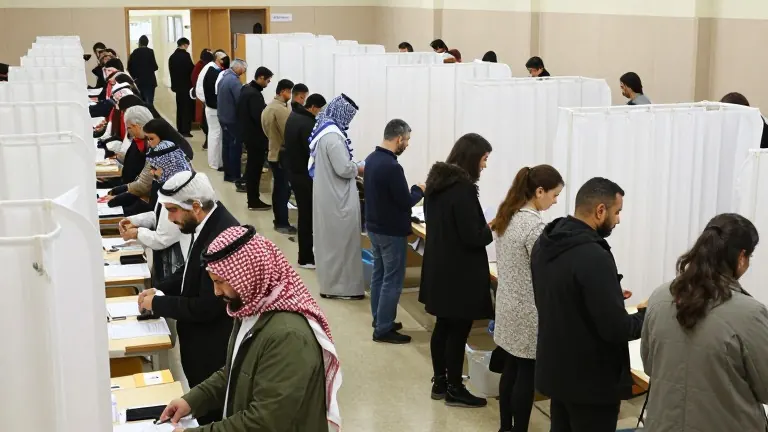
Voting began at 7:00 a.m. Tuesday as Israelis headed to polling stations to choose their next Knesset.
This is the first national election since the October 7, 2023, Hamas attack. The political environment has shifted since the 2022 vote. Security and war issues now dominate the campaign.
Recent polling suggests Prime Minister Benjamin Netanyahu and his sitting coalition face a difficult path. Gadi Eisenkot’s Yashar party has taken the lead in most recent surveys. Neither bloc appears capable of securing a 61-seat majority on its own.
A Channel 12 poll released Friday showed Netanyahu’s bloc at 50 seats. The opposition bloc was projected to win 56 seats. Arab parties were projected to win a combined 16 seats.
Likud, Netanyahu’s party, was projected to win 19 seats. That is down from the 32 seats it holds in the outgoing Knesset. Eisenkot’s Yashar party was projected to win 22 seats. Naftali Bennett’s B’Yachad was projected to receive 14 seats.
The opposition has pledged to hold Netanyahu accountable for the October 7 attacks. Most opposition leaders say they will not form a government with the Arab parties. They argue such a coalition is not viable after the war. Netanyahu has led Israel for 19 non-consecutive years.
Key issues include the IDF manpower crisis and haredi conscription legislation. Voters are also weighing calls for a state commission of inquiry into the government’s failures. The prospect of a Palestinian state has moved to the background as most parties agree against statehood.
Voter turnout will determine the number of votes needed to cross the 3.25% electoral threshold. At a 70% turnout rate, a party needs 165,635 valid votes to enter the Knesset. This figure rises as turnout increases.
Small parties including Ofer Winter’s People of Israel and Yoaz Hendel’s Reservists-Economics are fighting to clear that threshold. Their results will affect the ability of both major blocs to form a coalition.
Exit polls are expected at 10:00 p.m. Tuesday. Official results will be finalized in the coming days after the vote count is complete. Voting at diplomatic missions ended on October 16. Military base voting began last week.
Police deployed approximately 20,000 officers and volunteers across the country on Tuesday. They are stationed at polling stations and in surrounding areas to maintain public order.
The police stated these measures aim to safeguard the integrity of the elections. They want to ensure the democratic process follows the law.
Source: The Jerusalem Post