Michigan Senate Race: El-Sayed and Rogers Clash Over Tariffs, AI, and Israel
Two candidates with distinct records and policy stances compete in a pivotal contest for a U.S. Senate seat.
By Noah Ross ·
Michigan voters face a decisive choice Tuesday in a Senate race that could determine control of the U.S. Senate. The contest pits Democrat Abdul El-Sayed, 42, against Republican Mike Rogers, 63, in a state that has not elected a Republican senator in decades. The outcome hinges on local economic grievances and national partisan divides.
El-Sayed, the son of Egyptian immigrants and a former state representative, campaigns on a platform of structural economic change. He proposes a Medicare for All system that preserves private insurance options, funded partly by a tax on billionaire wealth. He also calls for a Cabinet-level agency to regulate artificial intelligence and a pause on frontier AI research. El-Sayed argues that AI is currently the top concern for voters, citing fears that the technology will eliminate jobs and increase energy costs in rural communities.
Rogers, a former Army officer, FBI agent, and U.S. House member, focuses his campaign on local issues such as literacy and infrastructure. He credits the pandemic with highlighting gaps in student reading proficiency, which he links to military recruiting standards. Rogers seeks to persuade African American voters that his opponent takes them for granted, often contrasting his local focus with El-Sayed's national agenda. At a recent gathering, Rogers criticized El-Sayed for campaigning with Rep. Alexandria Ocasio-Cortez, stating, "I want to take care of Flint."
The race has intensified over the Middle East and trade policy. El-Sayed argues that a vote for Rogers supports President Trump’s tariffs, which the National Taxpayers Union Foundation estimate have cost Michigan $23 billion since January 2025. Rogers has expressed disagreement with the tariffs but stated he would support efforts to override the president if necessary. The two candidates also differ sharply on Israel. El-Sayed supports an arms embargo on Israel and has accused the country of committing genocide in Gaza. Rogers opposes those claims and defends Israel’s right to exist as a Jewish state.
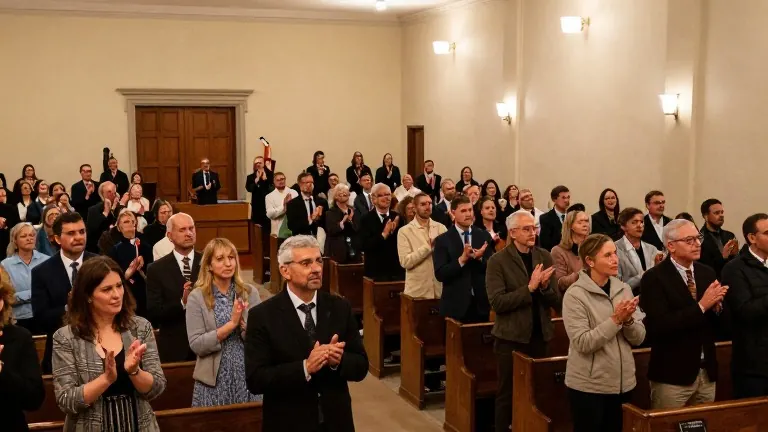
Religious dynamics play a prominent role in the election, given Michigan’s large Arab American and Jewish populations. President Trump visited Port Huron last week to attack El-Sayed, calling him a "jihadist member" who needs to be stopped from becoming a senator. Rogers has also cited a 2012 letter signed by El-Sayed supporting Egypt’s post-Arab Spring government as evidence of links to the Muslim Brotherhood. El-Sayed disavows the group and argues that Republicans are targeting his faith to win the vote.
The state’s more than 200,000 Arab Americans are expected to turn out in record numbers for El-Sayed, who would become the nation’s first Muslim senator if he wins. Conversely, the Rogers campaign hopes to secure votes from the state’s approximately 100,000 Jewish voters, a traditionally reliable Democratic constituency. Rep. Haley Stevens, whom El-Sayed defeated in the primary, endorsed Rogers on Sunday over disagreements regarding Israel policy.
Both candidates outlined their priorities for the first term if elected. El-Sayed emphasized the ability to win elections against big money by engaging directly with constituents. Rogers stated he intends to change the politics of Michigan by serving as a dedicated advocate for the state’s residents.
Source: CBS News