Montana judge halts new rule that could bar students from voting
A temporary stay keeps out-of-state college students eligible to register in their host counties while a final decision is pending.
By Anthony Hoffmann ·
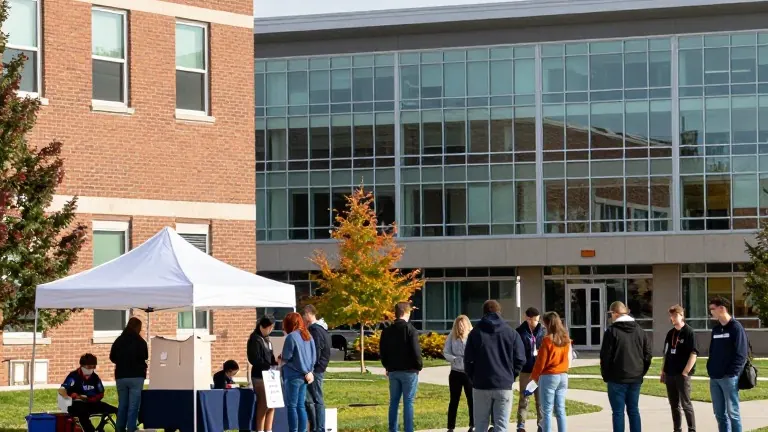
A Montana state judge blocked a new voting residency restriction on Tuesday, allowing out-of-state college students to register in their host counties for the upcoming midterm elections.
The ruling by Missoula County Judge Jason Marks keeps the previous state rules in place while his final decision on the lawsuit is prepared. The case was brought by student advocates at the Montana Public Interest Research Group, known as MontPIRG. The organization argues the new law could force thousands of eligible students to lose the ability to vote in the communities where they study.
Last year, the Republican-controlled Montana legislature passed a measure targeting "temporary" residents in "educational programs." Under the revised law, these individuals could only register in a specific Montana county if they intended to make that county or the state their permanent home upon completing their program. The change aimed to tighten residency requirements for voting purposes.
State Republican officials contend the restriction does not apply to students at colleges and universities. In a court filing, they argued that the word "temporary" would become meaningless if it covered standard degree programs. They stated that no one understands obtaining a two, four, or eight-year degree as a temporary endeavor.
Judge Marks rejected that interpretation in a February preliminary finding. He determined the restriction likely violates the Montana constitution. This month, he held a hearing in the case and is now drafting his final ruling. Until that decision is issued, the stay remains in effect.
The legal dispute centers on the concept of domicile. In voting law, domicile is the singular, fixed, and permanent principal home where a person intends to return, even if they do not currently live there. Yael Bromberg, an attorney who co-edited a book on youth voting rights, explained that for a student who does not know where they will live after graduation, this determination is highly personal and individualized.
Michael Hanmer, a professor of government and politics at the University of Maryland, noted that federal law sets ground rules to prevent states from discriminating against specific voter groups. He said college students must be treated the same as any other new resident in a particular area. Hanmer expressed doubt that the Montana law will survive legal scrutiny.
"I would be surprised if this attempt to restrict students from voting if they're in Montana just for educational purposes holds up," Hanmer said.
While the right to choose a voting location exists, Hanmer warned that students should be aware of other state requirements. Some states require new residents to obtain a state ID or change car registration to maintain their voting status. He emphasized that these additional steps apply to all new residents, not just students.
Source: WFAE