US Military Strike in Pacific Kills Five Suspected Drug Runners
Southern Command confirmed the deaths Tuesday, adding to a campaign that has resulted in over 70 attacks and 240 fatalities since the Trump administration began targeting cartel vessels.
By Noah Ross ·
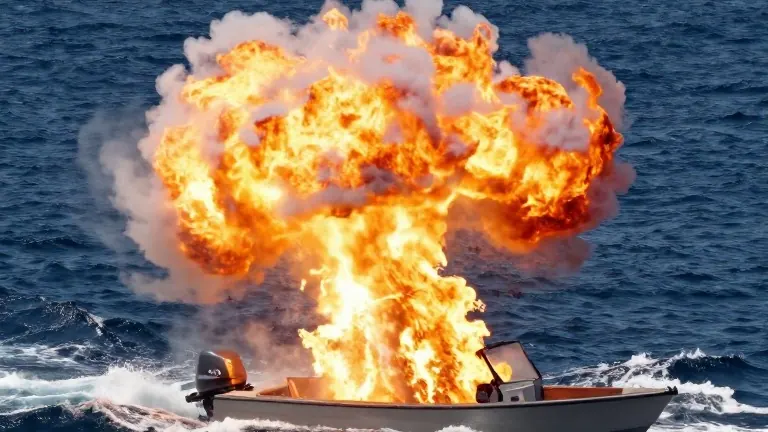
Five people died in the latest U.S. military strike against a suspected drug-trafficking vessel in the eastern Pacific on Tuesday, October 27. U.S. Southern Command (SOUTHCOM) identified the dead as narco-terrorists involved in narcotics trafficking. The operation was conducted by Joint Task Force Western Hemisphere under SOUTHCOM’s direction.
Command officials described the target as a go-fast boat traveling along established trafficking routes. They stated that confirmed intelligence indicated the vessel was actively involved in the drug trade. SOUTHCOM did not provide a precise geographic coordinate for the strike, only confirming the location as the eastern Pacific.
Video released by the command shows the boat on the water before a large fireball engulfs the vessel. This incident marks the most recent action in a multi-month campaign by the Trump administration against suspected cartel boats. According to The Associated Press, the broader effort has included more than 70 strikes, resulting in at least 240 deaths.
The military has consistently labeled individuals aboard targeted boats as narco-terrorists or linked them to designated terrorist organizations. However, officials have generally not named the specific individuals killed or provided physical evidence that the vessels were carrying narcotics at the time of the strike.
Legal experts and human rights groups have questioned the legal justification for using deadly force against suspected drug traffickers outside of a traditional battlefield. Lawmakers have also scrutinized the campaign, focusing on the distinction between combat operations and law enforcement actions in international waters.
Secretary of State Marco Rubio addressed the operations in September, noting that the U.S. was seeking to cooperate with regional partners and follow their local laws. While stating that Washington had the capacity to act unilaterally, Rubio said cooperation was the most effective approach. He added that the military would still blow up ships if necessary, with each decision made on an individual basis.
Recent footage from SOUTHCOM has also depicted a different tactical sequence for some operations. In those instances, military personnel intercepted and boarded boats, removed the crews, and subsequently sank the vessels rather than striking them directly with explosives.
Source: Fox News
More News · National news · Report a business · Got a Story?