NASA's Swift Observatory plunges back to Earth after 22 years in orbit
The 3,200-pound space telescope reentered the atmosphere over Indonesia after a rescue mission failed, ending a career that transformed the study of cosmic explosions.
By News Media House Staff ·
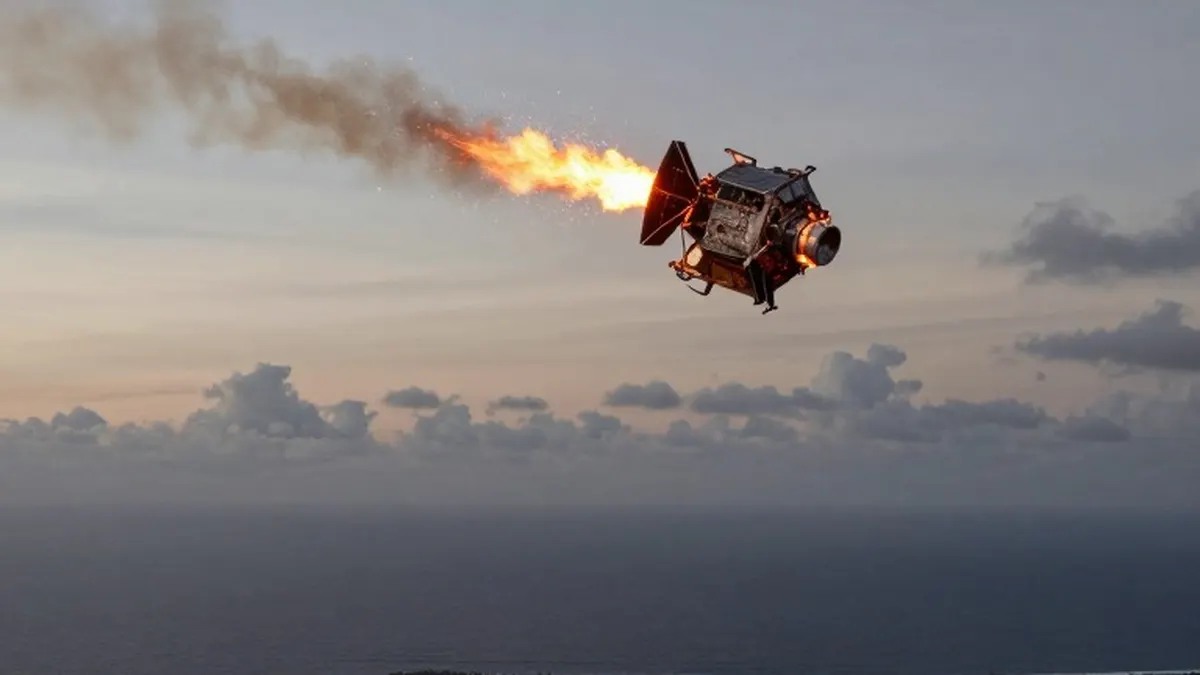
A 1.5-ton NASA telescope that spent more than two decades hunting some of the most violent events in the universe has crashed back to Earth, months after an effort to rescue the wayward instrument failed.
The roughly 3,200-pound Swift Observatory reentered Earth's atmosphere at 7:39 a.m. ET over the North Sumatra region of Indonesia, NASA said. Much of the spacecraft burned up during the plunge, though the agency said some components were expected to survive reentry and could be found sprawled across hemispheres.
The observatory's reentry path was tracked by NASA and the U.S. Space Force. NASA had predicted a reentry time of around 3:30 a.m. ET on Nov. 4, with an 11-hour window of uncertainty on either side. The agency had previously said the 'risk of harm coming to anyone on Earth is unlikely,' placing the odds at about 1 in 2,100.
The telescope was sent into low-Earth orbit almost exactly 22 years ago to search for cosmic explosions, including gamma-ray bursts and supernovas. It was named for its ability to swerve rapidly toward such events as they were detected.
Swift was initially designed to run a two-year mission, but it continued operating until last month, when solar activity finally dragged it back down toward Earth. NASA contracted Katalyst Space in July to save the telescope, and the company dispatched a three-armed robot named Link to push the observatory back into place. The robot ran into trouble shortly after launching and was not able to get within seven miles of the telescope. The robot itself fell back to Earth in September, and in August it was decided that the Swift Observatory would be brought back down.
The telescope kept returning observations until late October, when NASA determined it had dropped too low to remain steady. Its systems were shut down at that time.
Over its long career, Swift observed more than 2,000 gamma-ray bursts and 1,400 exploding stars. It also served as a 'first responder' for the Hubble and Webb space telescopes, NASA said, issuing alerts so those and other facilities could investigate its findings more deeply.
'Swift has broadened our understanding of a wide variety of cosmic objects and events, from active galaxies powered by supermassive black holes and stars undergoing X-ray flares, to supernova explosions and comets and asteroids in our own solar system,' NASA said in a blog post.
Scientists are still trying to figure out how to replace the work done by the observatory. 'We've known this day would come since before Swift was launched. At least in low-Earth orbit, what goes up must come down. And that end is catastrophic,' John Nousek, a Pennsylvania State University astronomer who led the control team, said on Monday. 'Our fervent hope is that the lessons learned by the successes of Swift can be applied to new generations of space missions to accelerate our discoveries about the universe,' Nousek added.
Originally published by News Media House · Source: CBS News
More News · National news · Report a business · Got a Story?