Federal Judge Halts Trump Arch Construction After Late Night Approval
A court order issued just after the planning commission approved the project temporarily stops work on the 250-foot monument in Washington D.C.
By News Media House Staff ·
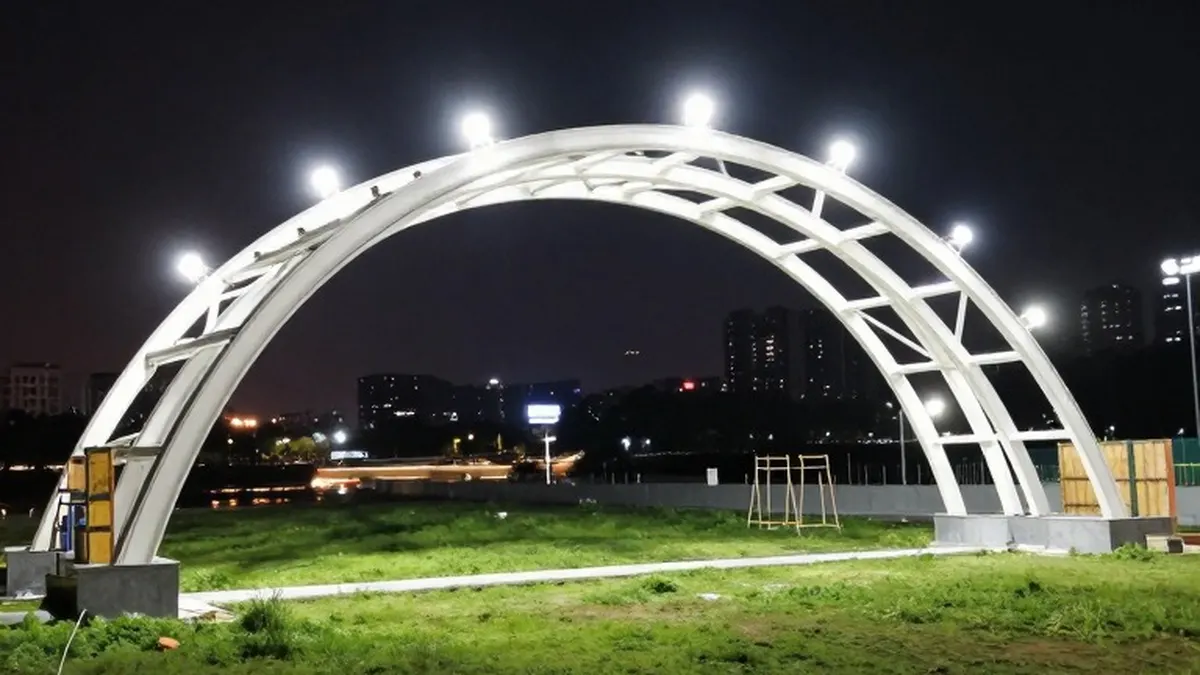
A federal judge has issued an order blocking construction on President Trump's proposed arch, halting work that the administration intended to begin immediately. The decision comes just hours after a federal planning commission granted final approval to the project. District Court Judge Tanya Chutkan issued the order late Friday, barring the government from any construction activities for 14 days. This move grants a request filed previously by the governments of Washington D.C. and Virginia.
In a 33-page opinion, Judge Chutkan examined the administration's varying justifications for the arch, noting a sudden emphasis on national security. She concluded that local governments are likely to suffer harm from the construction. The 250-foot structure is planned for Memorial Circle, a traffic island on the bridge connecting the Lincoln Memorial to Arlington National Cemetery. Officials stated that work would occur 20 hours a day, year-round, for a period of two to three years.
The ruling arrived less than two hours after the National Capital Planning Commission voted 8-4 to approve the arch. The commission heard nearly eight hours of testimony from veterans, lawmakers, and residents who opposed the structure. Many critics argued that the arch would block important views, insult service members buried nearby, and add risk to the complex airspace over the capital. They also raised questions about the project's legality and cost, which the administration has not confirmed.
Supporters, including a small number of speakers such as Republican Representatives Andrew Clyde and Brian Mast, viewed the arch as a tribute to the nation. However, many veterans expressed personal concerns, with some having family members buried at Arlington. Some implored commissioners to consider the legacy of their decision. The commission's deliberations lasted less than an hour, with Trump appointees expressing support for moving forward quickly.
Commissioners who supported the project argued that Congress had authorized the build in 1925 when it approved a pair of columns for the same site. They also pointed to recent claims by the President and Defense Secretary Pete Hegseth regarding national security benefits. However, officials admitted that no specific national security analysis was included in the final submission, with some details filed under seal in court.
D.C. Council Chair Phil Mendelson voiced strong criticism, stating that the commission could not approve plans that had not been fully submitted. He introduced a motion to postpone the vote, which failed by a margin of 8 to 4. Vice Chair Stuart Levenbach, a Trump appointee, expressed concern that delaying the vote would violate the proponent's time constraints.
Following the commission's approval, the administration notified the court within half an hour. Judge Chutkan's subsequent order turned that green light into a temporary red. Rep. Don Beyer, a Virginia Democrat, stated that while this decision stops immediate implementation, Congress and the courts must create permanent safeguards. He noted that the administration has frequently circumvented legal requirements.
Historic preservation groups and consumer rights nonprofits have reacted strongly to the approval process. Brent Leggs of the National Trust for Historic Preservation called the vote a sham that undermined the democratic process. Jimi Shaughnessy of the National Parks Conservation Association said the organization would bring the issue to Congress to ensure the arch is never built.
Democratic lawmakers, who are expected to regain a Congressional majority in January, have vowed to investigate and potentially block the project. Rep. Jared Huffman warned that officials advancing a project not authorized by Congress may face legal risks. He emphasized that the new Congress will take the rule of law seriously, urging involved firms to consider the hazards they may be facing.
The legal challenge stems from lawsuits filed by a group of Vietnam War veterans and an architectural historian earlier this year, as well as a joint suit by D.C. and Virginia. These groups argue that an arch requires Congressional approval, which the administration has not sought. Robert Weissman of Public Citizen noted that Congress does not need to act to stop the arch since it never approved it, but additional measures could help given the administration's track record.
Originally published by News Media House · Source: NPR
More News · National news · Report a business · Got a Story?