Apple’s $399 iPod Changed How Americans Listen to Music
Twenty-five years ago, a device the size of a deck of cards promised to hold a user's entire music collection in their pocket.
By Noah Ross ·
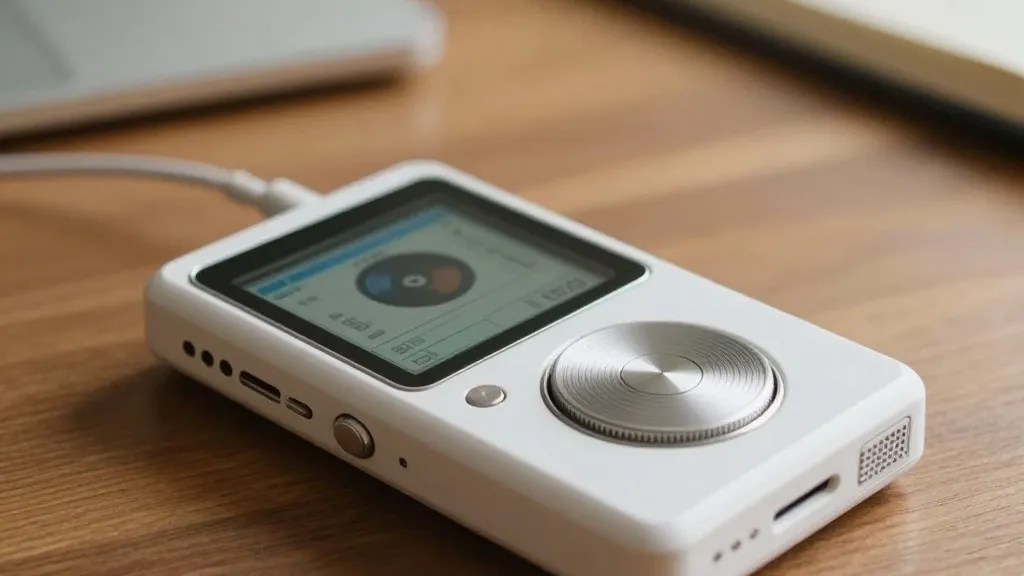
The original Apple iPod hit the market twenty-five years ago today, fundamentally shifting how consumers carried their music. At a price of $399, the device offered a simple but powerful promise: it could hold a user's entire music library in a pocket-sized package. This launch marked a pivotal moment in personal technology, introducing a dedicated music player that would define a generation before smartphones eventually absorbed its function.
By October 2001, Apple had already recovered from the dot-com bubble burst. CEO Steve Jobs had guided the company into a new era with the release of Mac OS X and the popular iBook and iMac lines. Jobs envisioned the Mac as the central hub for a user's digital life, connecting cameras, camcorders, and DVD players. He identified portable music as a massive, untapped market where no single leader had yet established dominance.
At the time, competitors like Sony, Creative, and Sonic Blue offered portable digital music players. However, Jobs argued that none of them had found the right formula. The market was fragmented across four types of devices: standard CD players, MP3 CD players, flash-based players, and hard disk-based jukeboxes. Apple chose the hard disk approach for the iPod, believing it offered the best balance of capacity and cost for the consumer.
The device itself was a feat of engineering. It measured 2.4 by 4 by 0.78 inches, roughly the size of a deck of cards, and weighed just 6.5 ounces. This compactness was made possible by a 1.8-inch hard drive from Toshiba, which was only 0.2 inches thick. The 5GB storage capacity allowed the player to hold 1,000 songs, defined as typical pop tracks encoded at 160Kbps. For most listeners at the time, this represented their complete music collection.
Speed was a major selling point. The iPod used a FireWire 400 connection, which Jobs claimed was the fastest available for a music player. Transferring a full CD of music took only five to ten seconds, a stark contrast to the five minutes required by USB connections of that era. Filling the entire 1,000-song capacity took about ten minutes, whereas a USB-based player could take up to five hours. The device also featured a rechargeable lithium-polymer battery that provided ten hours of playback and could be recharged to 80 percent in one hour.
Design played a crucial role in the iPod's appeal. The device featured a minimal, durable exterior with a single-hand control scheme. A specialized scroll wheel with tactile feedback allowed users to quickly navigate playlists, artists, or individual songs. During the launch presentation, Jobs demonstrated the interface by playing 'Building a Mystery' by Sarah McLachlan. The sleek form factor and intuitive controls set a new standard for portable electronics.
The iPod launched alongside iTunes 2, which introduced features like MP3 CD burning and automatic synchronization. This Auto-Sync feature ensured that the music library curated on a Mac was always mirrored on the portable device. When users connected the iPod to charge or transfer files, the library would update automatically. The device also functioned as a FireWire hard drive, adding versatility to its primary role as a music player.
The iPod line continued to evolve for over a decade, coexisting with the iPhone, which launched in early 2007. As smartphones improved, the need for a separate music player diminished. The final model, the 7th-generation iPod Touch, released in May 2019, marked the end of an era. While the product line was left unmaintained for a few years, Apple officially discontinued it in May 2022. The original device remains a landmark in the history of consumer electronics.
For many, the iPod was more than just a gadget; it was a cultural icon. It changed the way people experienced music, moving it from bulky home systems to a personal, pocket-sized companion. The device's success demonstrated that simplicity, design, and convenience could dominate a crowded market. Twenty-five years later, its legacy persists in the way we organize and consume digital media today.
Source: Tom's Hardware · original report published