New Federal Rule Would Mandate Cyan Lights for Driverless Vehicles
The National Highway Traffic Safety Administration has proposed a unified standard for autonomous vehicles to indicate their operational status to other drivers.
By Beatriz Bailey ·
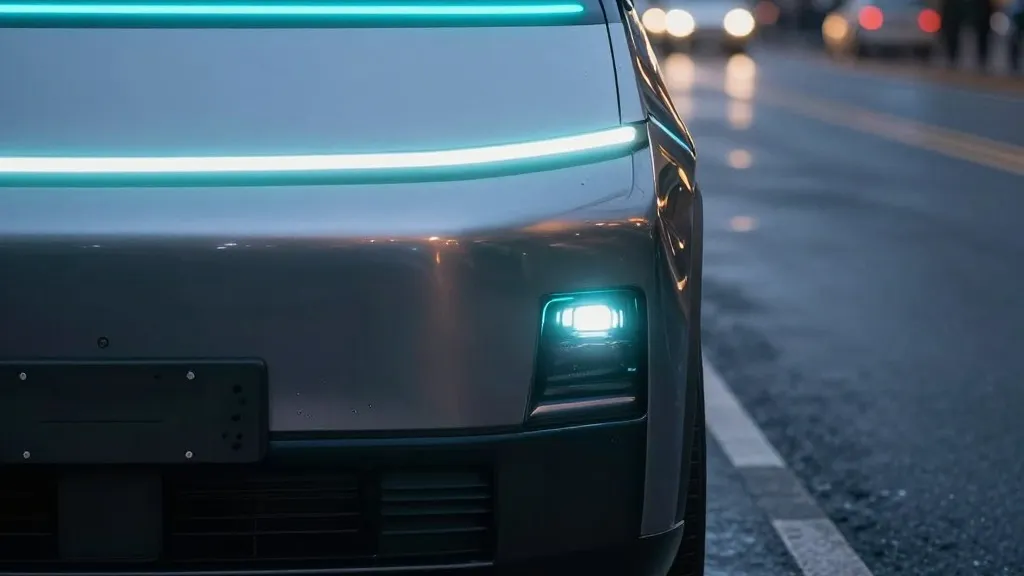
The National Highway Traffic Safety Administration has issued a formal proposal that would standardize the visual signaling for autonomous vehicles across the United States. The agency’s new draft rules suggest that driverless cars should employ distinct cyan-colored marker lamps to clearly communicate that an automated driving system, rather than a human, is in control. This development marks a decisive shift from years of industry debate regarding how best to alert the public to the presence of uncrewed vehicles, which had previously considered various options including flashing text displays and audio alerts.
The proposal involves a specific rewrite of Federal Motor Vehicle Safety Standard No. 108. By updating these regulations, the NHTSA aims to align federal requirements with the technical realities of autonomous driving. The primary objective is to create a uniform language for robotaxis and self-driving cars, ensuring that when an automated system is active, the signal is consistent and easily recognizable to law enforcement and other road users nationwide.
The selection of the cyan hue is driven by the need to avoid visual confusion with existing automotive lighting conventions. The automotive industry currently reserves red, amber, and white lights for standard functions such as brake lights, turn signals, and headlights, while flashing blue and red lights are typically associated with emergency vehicles. Cyan, a blue-green shade, occupies a visual space that is distinct from these established colors. This distinction helps ensure that a driverless vehicle’s status is immediately apparent without being mistaken for a standard car or an emergency responder.
There is existing precedent for this type of signaling at the state level. Mercedes-Benz previously secured approval in certain states to use turquoise lights on its Level 3 Drive Pilot vehicles. Although the automaker has since moved away from that specific implementation in favor of a Level 2++ system, the NHTSA’s proposal seeks to establish a national baseline. This would allow major players in the sector, including Waymo, Nuro, Zoox, GM, and Mercedes, to adopt a single, consistent standard for their fleets.
Under the proposed framework, the installation of cyan marker lights would remain optional for manufacturers. However, if a company chooses to include them, the federal rules would dictate the specific color, brightness, and placement of the lamps. This approach aims to prevent a fragmented landscape where different operators use varying colors or signals, thereby reducing potential confusion on the road. The goal is to ensure that any compliant vehicle uses a legally defined and consistent setup.
In addition to adding new requirements, the NHTSA proposes removing several lighting mandates that are irrelevant to vehicles without human drivers. Current regulations require physical controls such as hazard switches, manual beam shifters, and turn levers to be present inside the cabin. The agency suggests eliminating these requirements to accommodate designs that may lack traditional interior controls. Furthermore, the proposal includes an update to the 12.8-volt testing standard, allowing automakers to utilize modern LED architectures without facing unnecessary administrative hurdles.
The agency is also considering relaxing rules regarding the physical positioning of high-beam and low-beam lights, specifically whether they must be arranged vertically. These changes are part of a broader administrative effort by the Department of Transportation to streamline the deployment of autonomous vehicles. The overarching goal is to facilitate the creation of cars that may not feature traditional steering wheels or pedals, thereby removing regulatory barriers that were designed with human-operated vehicles in mind.
Despite these efforts to modernize regulations, existing rules remain in force until the new standards are finalized. Last month, the NHTSA initiated an audit query into the Tesla Cybercab. The investigation focuses on the technical data and processes Tesla relied upon to certify the vehicle, particularly regarding its lack of sideview mirrors, pedals, and a steering wheel. These features are currently required under existing FMVSS standards, highlighting the ongoing tension between current regulations and the evolving design of autonomous vehicles.
Source: The Verge · original report published