Bank of Canada Policy: First Hike Since 2023 Targets Energy-Driven Inflation
Governor Tiff Macklem raised the benchmark rate to 2.5 percent, warning that further increases may be necessary to curb the spillover effects of high energy costs.
By Noah Ross ·
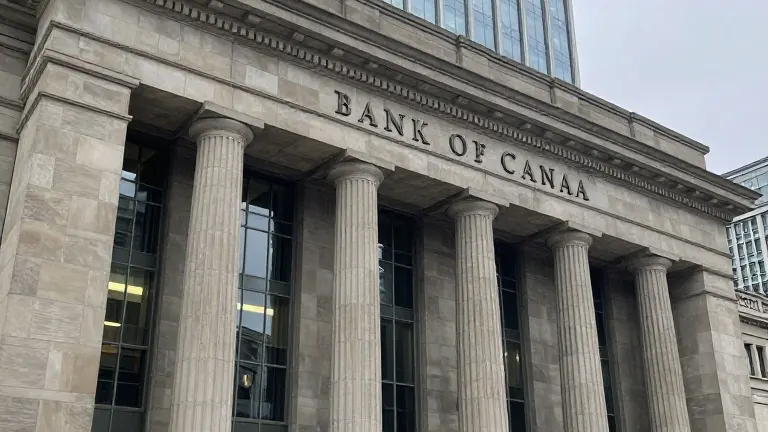
The Bank of Canada raised its benchmark interest rate by 25 basis points on Wednesday, marking its first increase in more than three years.
The Governing Council moved the policy rate to 2.5 percent in a decision that was widely anticipated by financial markets. This action represents the first shift in direction since the bank began its tightening cycle in July 2023. The central bank cited soaring energy costs as the primary driver for the move, warning that these prices risk fueling a broader wave of inflation across the Canadian economy.
Governor Tiff Macklem stated that the outlook for inflation has risen substantially while the economy has demonstrated resilience. He argued that an increase in the policy rate is necessary to reduce the risk that elevated energy prices become generalized across other sectors. Macklem noted that while further rate increases could be required, the bank will proceed carefully due to existing uncertainties.
Inflation data shows the annual rate reached 3.2 percent in September, exceeding the bank's target range of 1 to 3 percent. This spike was driven almost entirely by higher energy and transportation costs. The central bank now projects that inflation will end the year at 3.5 percent. It expects the rate to remain around 3 percent for most of 2027 before returning to the 2 percent target by mid-2028. The bank previously forecast 2027 inflation at 2 percent in July.
Economic growth projections have also been revised. The bank expects growth this year to reach 1 percent, up from the 0.7 percent predicted in July. New forecasts indicate a slowdown from 3.3 percent annualized growth in the second quarter to 2 percent in the third quarter and 0.8 percent in the fourth quarter. Despite this immediate cooling, the bank upgraded its GDP growth forecast for 2027 and 2028 to 2 percent from the 1.8 percent previously estimated.
Market analysts have mixed reactions to the decision. Andrew Grantham, a senior economist at CIBC Capital Markets, suggested that core inflation measures will not accelerate as sharply as the bank fears if global energy prices ease. He believes the policy rate will not need to rise above 2.75 percent. Money markets currently price in a 25 basis point increase by January, with the benchmark rate potentially reaching 3.25 percent by December next year.
Economists who opposed the hike pointed out that core inflation, which excludes volatile items, remains near 2 percent. They argue that raising rates could hinder a modest economic recovery, particularly given ongoing trade tensions with the United States and a weak job market. Macklem acknowledged that new US tariffs will slow the economy in the fourth quarter but expressed confidence that growth will rebound in 2027 as consumer spending and business investment strengthen.
The Bank of Canada will announce its next rate decision on December 9.
Source: Al Jazeera
More Business · Consumer Alerts · Report a business · Got a Story?