Florida Law Gives Republicans First Place on 2026 Ballots
A 1951 statute that favors the party of the sitting governor is under scrutiny as researchers argue it confers a measurable voting advantage in close races.
By Noah Ross ·
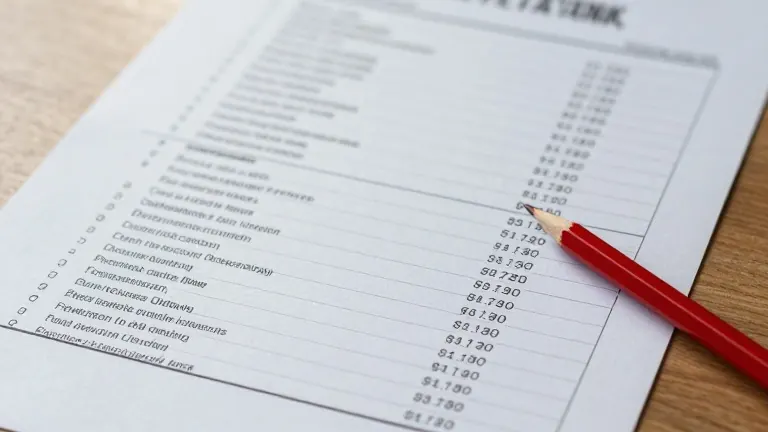
Florida law requires the Republican Party to appear first on general election ballots for the 2026 cycle. The rule, established in 1951, dictates that the top position goes to the party that won the previous governor's race. Because Governor Ron DeSantis secured reelection in 2022, the GOP holds the primary spot on the state's ballots this year.
The statute has remained in effect for more than a quarter century. Republicans have won the governorship in consecutive cycles since 2006, including victories by Charlie Crist, Rick Scott, and DeSantis. This continuous control ensures that Republican candidates retain the top placement on the ballot in every general election during this period.
Political scientists argue this ordering creates a measurable advantage known as the primacy effect. Jon Krosnick, a Stanford University political scientist, explains that voters often choose the first acceptable option when they lack specific information about candidates. He noted that this bias occurs in various decision-making contexts, from beer tastings to crossing parking lots. Krosnick stated that the effect can add two to three percentage points to a candidate's total in narrow races.
Darren Grant, an economics professor at Sam Houston State University, found that the advantage is particularly strong in down-ballot contests. He linked the rule to Florida's recent gubernatorial results, where Republican candidates won by narrow margins. Rick Scott won reelection in 2010 by roughly 1.2%, and DeSantis defeated Democrat Andrew Gillum by 0.4% in 2018. Grant described this sequence as a self-reinforcing cycle where one victory secures the ballot position for the next cycle.
Democrats have attempted to overturn the law through the courts. In 2018, national Democratic organizations and state voters filed a lawsuit claiming the rule creates an artificial electoral advantage. The plaintiffs argued that candidates from the governor's party benefit from position bias. The National Republican Senatorial Committee and the Republican Governors Association defended the state, writing that the statute imposes only minimal burdens on constitutional rights.
U.S. District Judge Mark Walker ruled in favor of the Democrats. However, a federal appeals court reversed that decision in 2020. The higher court dismissed the case on procedural grounds, stating the plaintiffs lacked legal standing and had sued the wrong official. The court also determined the issue involved political questions beyond judicial authority. A similar legal battle occurred in West Virginia, where a federal appeals court also overturned a lower court ruling that favored Democrats.
Florida is one of at least a dozen states that uses political party affiliation to determine ballot order, according to a 2025 analysis by the National Conference of State Legislatures. Other states use different methods, such as alphabetical listing, random drawings, or rotating candidate names across ballots in the same election. The 2026 election will be the next test of whether the current ordering influences voter behavior in the state's key races.
Source: WLRN