NASA hints at 22 Starship launches for lunar mission
A new internal estimate suggests the Artemis program may require nearly two dozen tanker flights to fuel a Moon lander, raising concerns about the timeline for returning humans to the lunar surface.
By Anthony Hoffmann ·
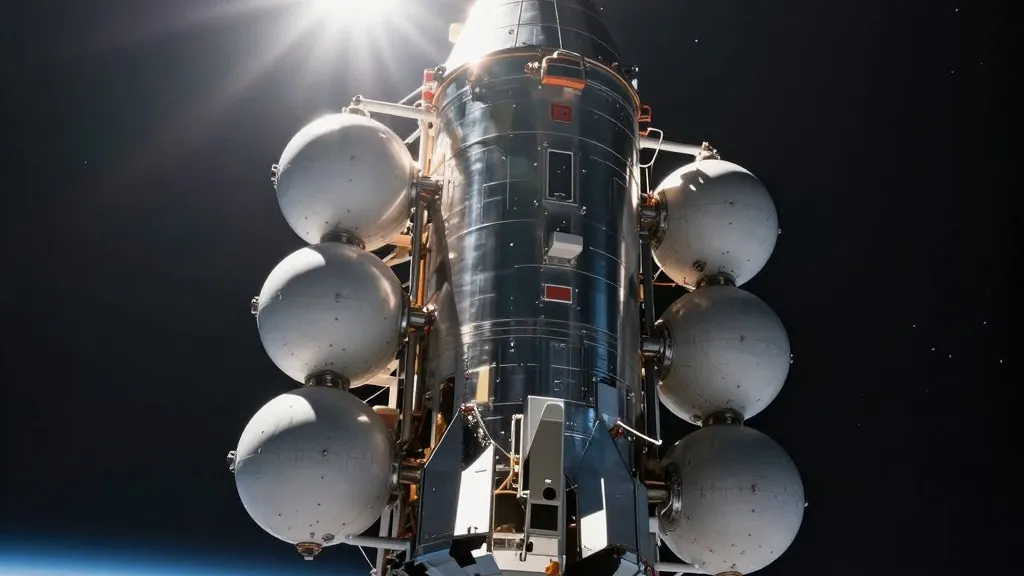
NASA has long treated a specific operational metric with the secrecy of a nuclear code, but recent disclosures suggest the agency is preparing for a significantly higher launch cadence than previously assumed. The figure in question represents the number of Starship rockets SpaceX must launch from Earth to accumulate enough propellant for a lunar lander to reach the Moon, conduct a landing, and return to lunar orbit. While the agency has historically avoided pinning down this number, a new estimate circulating among safety officials points to a total of 22 launches.
The number of required flights has been a moving target throughout the development of the Artemis program. In 2023, Lisa Watson-Morgan, then the director of NASA’s Human Landing System, indicated to reporters that the agency had a general understanding of the requirement but was hesitant to provide an exact figure. She later described the number as falling in the "high single digits to the low double digits," a range that implied roughly a dozen launches. At that time, the operational model involved launching one "depot" Starship to low-Earth orbit, followed by eleven "tanker" Starships to load it with liquid oxygen and methane.
Other officials have occasionally cited higher figures, with some referencing "high teens" for the total launch count. The underlying hope for the program has always rested on the assumption that SpaceX would dramatically increase the lift capacity of the Starship vehicle. Such an improvement would reduce the number of tanker flights needed to fuel the depot, thereby lowering the overall logistical burden on the launch schedule and the associated costs.
However, growing concerns within NASA suggest that this dramatic increase in lift capacity may not materialize soon enough. Some agency officials fear that if the vehicle's capacity does not improve rapidly, the Starship rocket may struggle to play a meaningful role in returning humans to the Moon within this decade. The delay or reduction in the vehicle's performance capabilities could force the agency to rely on a higher volume of launches to achieve the same fueling goals, straining the timeline for the Artemis program.
These concerns were formally raised during a quarterly meeting of the NASA Aerospace Safety Advisory Panel held on Thursday. Charlie Precourt, a former NASA astronaut and current panel member, spoke regarding the risks associated with the Artemis program and the specific challenges of landing humans on the lunar surface. His comments highlighted the operational uncertainties surrounding the propellant logistics, which remain a critical bottleneck for the mission's success.
The shift toward a higher launch estimate signals a potential recalibration of the program's financial and logistical outlook. If 22 launches are required, the infrastructure in low-Earth orbit must be robust enough to handle that volume of traffic. This places additional pressure on SpaceX to maintain a high launch rate and on NASA to manage the increased risk profile associated with more frequent orbital operations.
For the business of spaceflight, this development underscores the importance of vehicle performance metrics. The ability to lift more payload per launch is directly tied to the cost-effectiveness of the mission. As the agency moves forward, the focus will likely remain on whether SpaceX can meet the necessary performance milestones or if the program must adapt to a scenario where more, smaller deliveries are required to fuel the lunar voyage.
The stakes for the Artemis program are high, as the timeline for returning humans to the Moon is tightly linked to the availability of these launch capabilities. The new estimate provides a clearer, if less optimistic, picture of the logistical requirements. As the agency continues to guard this number, the 22-launch figure may serve as a benchmark for future planning and risk assessment in the coming months.
Source: Ars Technica · original report published
More Business · Consumer Alerts · Report a business · Got a Story?