Seagrass Debris Offsets Mangrove Soil Loss in Biscayne Bay
Research shows offshore plant material contributes up to half the carbon in mangrove soil, helping the ecosystem cope with rising sea levels.
By Beatriz Bailey ·
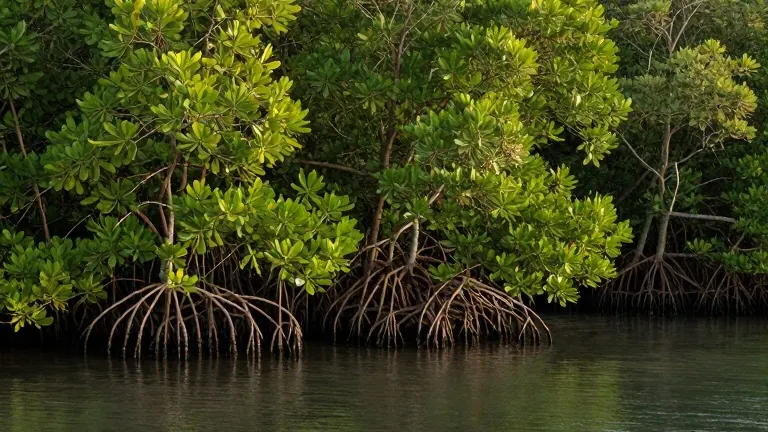
Mangrove forests in Biscayne Bay are losing ground to rising seas, but a new study indicates that debris from offshore seagrass meadows is helping slow the retreat. The findings suggest that the health of the bay’s submerged vegetation directly impacts the stability of the coastal infrastructure that protects South Florida cities.
The research, published in Estuaries and Coasts by Florida International University and the National Park Service, quantifies the gap between land and water levels. Soil beneath the mangroves is accumulating at a rate of 2 to 4 millimeters per year. Meanwhile, sea levels in the region are rising by 8.5 millimeters annually. The seagrass input does not eliminate this deficit, but it increases the volume of material available to build the forest floor.
Kevin Montenegro, a biology Ph.D. graduate from FIU, led the fieldwork. For two years, he transported a 16-foot canoe to the park before sunrise every month. He paddled an hour into Biscayne National Park to assess how much wrack, or loose plant matter, the tides deposited into the mangrove zones. His team recorded the depth of the debris piles at specific inland points and collected soil samples for chemical testing.
The chemical analysis revealed that 36% to 53% of the carbon near the surface originated from seagrass. This contribution was highest in wetlands near Cutler Bay. That area received more than three times the amount of wrack compared to the primary study site. The ground there also rose at the fastest rate recorded in the study.
Montenegro noted that decomposition rates vary based on debris volume. In areas with higher wrack accumulation, seagrass in mesh bags broke down more slowly. This slower decay allowed more organic material to remain and contribute to soil elevation. He stated, “If we lose those seagrasses, now we’re losing a huge contributor to mangrove resilience, mangrove blue carbon storage, as my paper shows.”
The study connects water quality offshore with land stability onshore. Montenegro, who now works for Miami-Dade County, observed that poor water conditions damage seagrass beds. When those beds decline, the supply of organic material reaching the mangroves decreases. He described the ecosystems as interconnected, saying, “I see mangroves and seagrass ecosystems as part of our city and community, just like streetlights, schools and businesses.”
Mangroves serve as a physical barrier against storm surge and provide habitat for marine life. The research highlights the dual role of these forests in filtering runoff and stabilizing coastlines. The study relied on elevation data collected by the National Park Service at the same sites since 2011 to track long-term changes.
Source: FIU News
More Business · Consumer Alerts · Report a business · Got a Story?