Cuban man sent to Central African Republic after missing immigration court date
Erick González faces life in Bangui with limited resources while his family in the U.S. seeks a legal path to reunite them.
By Beatriz Bailey ·
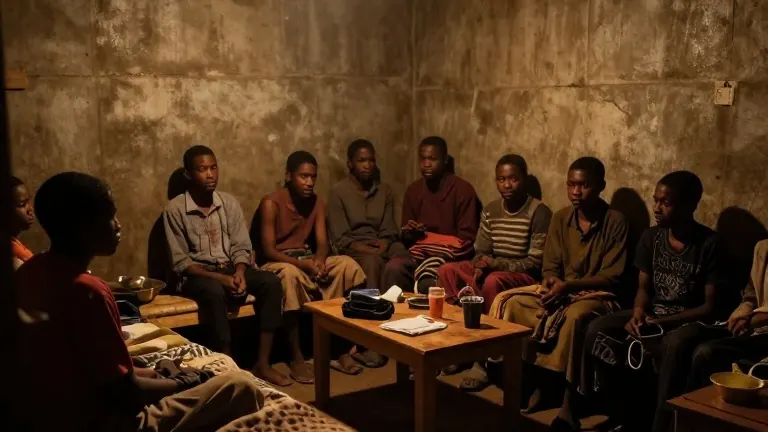
Erick González is currently living in Bangui, the capital of the Central African Republic, after U.S. immigration authorities deported him there. He shared video footage showing his current living conditions, describing the situation as difficult due to a lack of basic supplies and medical care. González stated that he is without official papers and faces poor conditions in the country.
The Cuban national is sharing a space with approximately 32 other migrants, most of whom are Hispanic. According to González, the group includes people from Cuba, Nicaragua, El Salvador, and Honduras. He arrived in the United States under the Migrant Protection Protocols, a program that required him to wait in Mexico for his immigration court date. González explained that he crossed into the U.S. and subsequently missed his hearing, leading a judge to issue a deportation order against him.
González is married to Isabel Estua, a U.S. citizen, and they have a three-year-old son. The family had an approved I-130 immigrant petition filed with the U.S. Citizenship and Immigration Services. However, Estua says this approval did not prevent the deportation. She noted that the deportation order makes it difficult for her husband to legalize his status in the U.S.
Immigration attorney Rosaly Chaviano, who is not involved in this specific case, clarified that an approved or pending family petition does not automatically stop a deportation order. She explained that while the petition may serve as a legal strategy for the future, it offers no present protection against removal. Chaviano added that the government retains the authority to deport individuals even if their residency applications are still being processed by USCIS.
The deportation occurred as part of the Trump administration's policy of sending migrants to third countries. Data from the Migration Policy Institute indicates the administration has cooperation agreements with about 35 nations. One of the main obstacles for González and other deportees is recovering their identification documents. Chaviano identified the lack of these documents as a major barrier to completing legal paperwork to return to the U.S. or transfer to another country.
González is currently seeking a credible fear claim, arguing that he fears for his safety in Africa. He has asked for his situation to be evaluated so he can potentially return to the United States. His wife, Estua, remains hopeful about reuniting with her husband. She expressed that she has not lost hope of bringing him back to the U.S.
Telemundo 51 contacted the Department of Homeland Security regarding the circumstances of González's deportation. As of the publication of this report, the agency had not provided a response to their inquiries.
Source: WSCV