
Netanyahu faces decisive vote as Arab turnout hits 1999 levels
Voters in Israel's Arab communities are turning out in numbers not seen in 27 years, potentially ending the current government's tenure.
By Anthony Hoffmann ·
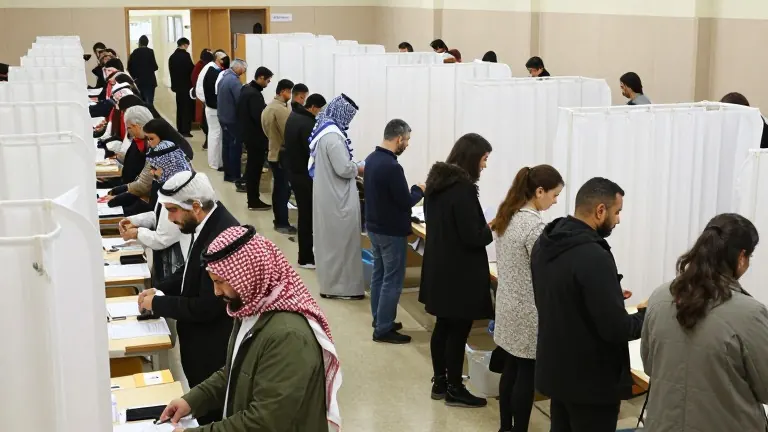
Polling places across Israel opened this morning under a heavy turnout from Arab citizens.
Prime Minister Benjamin Netanyahu has spent the campaign warning that Arab voters are flooding the polls to threaten his rule. The outgoing leader's alarm was factually correct this time. Arab Israelis are voting today in numbers not seen in decades. Their participation may end his tenure.
The last instance of such high Arab turnout occurred in 1999. In one of the country's few direct prime ministerial elections, Arab voters backed Ehud Barak almost unanimously. Their support helped oust Netanyahu for the first time and installed Barak, Israel's last left-wing prime minister.
The memory of that era remains sharp due to events in October 2000. Police under Barak's government opened fire on Arab demonstrators protesting Ariel Sharon's visit to the Temple Mount. Twelve Israeli citizens were killed. The Or Commission of Inquiry later confirmed grave failures in how police and the state treated Arab citizens. No police officer was ever charged.
That episode became a central wound in Arab Israeli memory. It encouraged many to keep a distance from the political mainstream for years. This silence kept many voters home in subsequent elections.
The current climate has shifted that dynamic. The outgoing coalition, described as the most radical in the country's history, has changed how the two million Arab citizens view their status. The government attempted to extend West Bank realities into Israel proper. It also left Arab communities vulnerable to criminal gangs with little state presence. Media figures associated with the coalition incited against Arab doctors, journalists, and officials.
This treatment taught many that marginalization can worsen. Consequently, the government that pushed Arab citizens out of politics may have driven them back to the polls. Without this pressure, turnout might have continued its long decline.
The high turnout is not necessarily a show of support for the Arab political establishment. That group is often viewed as closed and ineffective. Some Arab citizens voted for Jewish-led parties. Others cast ballots for Arab lists without enthusiasm. Many acted out of a sense of citizenship, similar to how they supported the state after the attacks in October 2023.
Arab citizens hold the power to shape the next government. In 2021, the Ra’am party provided the majority for the coalition that unseated Netanyahu. It was the first Arab party to join a government. The current opposition has been hesitant to pledge a similar arrangement. Leaders have refused to say they would govern with an Arab partner.
Arab voters now face a choice. They can trust the opposition to lead, or they can let the deadlock persist and help keep the current coalition in power. The opposition must state plainly that at least one Arab party is a legitimate partner before coalition talks begin. Anything less risks telling two million citizens that their voice has no place in shaping the country.
Source: The Jerusalem Post