Rubio targets business deals in Mumbai, skips Delhi
The US secretary of state visited a major oil refinery and met financial leaders instead of meeting Prime Minister Narendra Modi.
By Beatriz Bailey ·
US Secretary of State Marco Rubio bypassed the capital of India during his second visit to the country this year.
Rubio did not meet Prime Minister Narendra Modi. Instead, he traveled to Mumbai, the financial hub, and Jamnagar, a city in the state of Gujarat.
In Mumbai, Rubio met with Foreign Minister Subrahmanyam Jaishankar and various business leaders. This itinerary shifted the focus from high-level political talks to economic interactions.
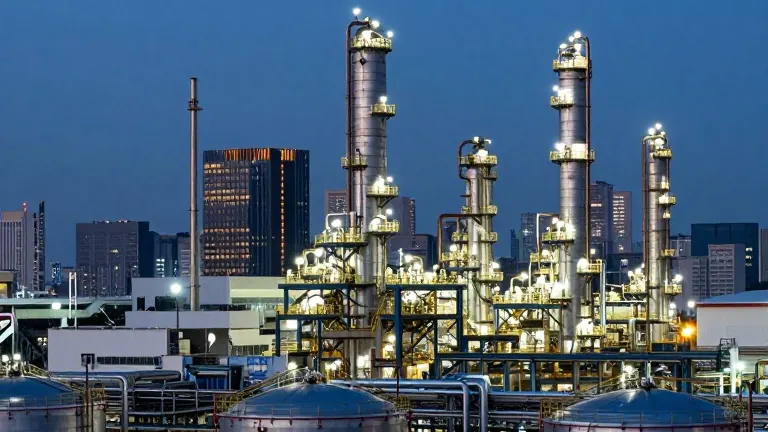
The visit to Jamnagar included a meeting with Mukesh Ambani, the chairman of Reliance Industries. The company operates a massive oil refinery complex in that location. Analysts suggest this stop was designed to address US concerns about high gasoline prices ahead of the November 3 midterm elections.
Milan Vaishnav, director of the South Asia Program at the Carnegie Endowment for International Peace, described the choice of venues as intentional. He noted that the administration views foreign policy through the lens of deal-making. Vaishnav stated that Mumbai is a logical location for drumming up business agreements.
The trip signals that India remains useful for President Donald Trump's ambitions, despite recent strains in bilateral ties over tariffs and Russian oil purchases. Vaishnav noted that the administration aims to encourage Reliance and India to process more Venezuelan crude oil.
Bilateral relations have faced challenges under the second Trump administration. A punitive 50% tariff imposed on India in 2025 was reduced to 18% earlier this year, but no comprehensive trade deal has been reached. Additionally, US restrictions on H-1B visas and green cards have affected Indian workers in the United States.
Despite these tensions, bilateral trade between the two nations reached a record high in 2025. US technology companies have pledged nearly $68 billion in AI infrastructure investment in India. The two countries also conducted a record number of joint military exercises this year.
Vaishnav warned that political turbulence could make new initiatives harder to achieve. He emphasized that the existing progress is often the result of decisions made years ago. The current diplomatic approach prioritizes short-term transactions over long-term strategic stability.
Source: The Guardian