One Seat Up for Grabs: Marylanders Vote to Erase Republican District
With polls showing 53% opposition, Governor Wes Moore’s campaign pivoted from re-election to defending Question 3.
By Anthony Hoffmann ·
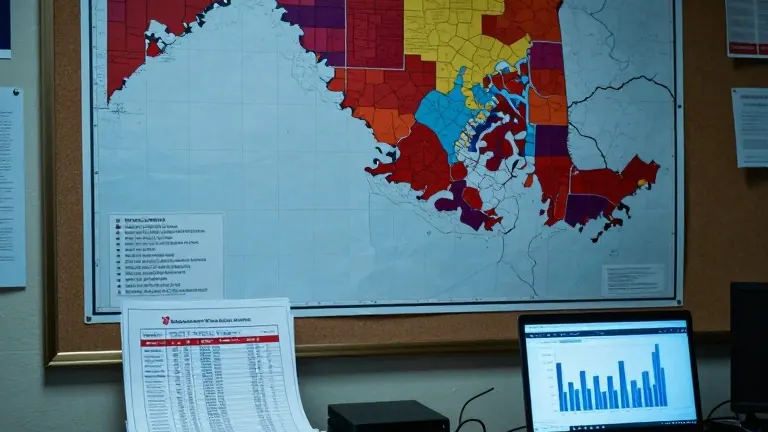
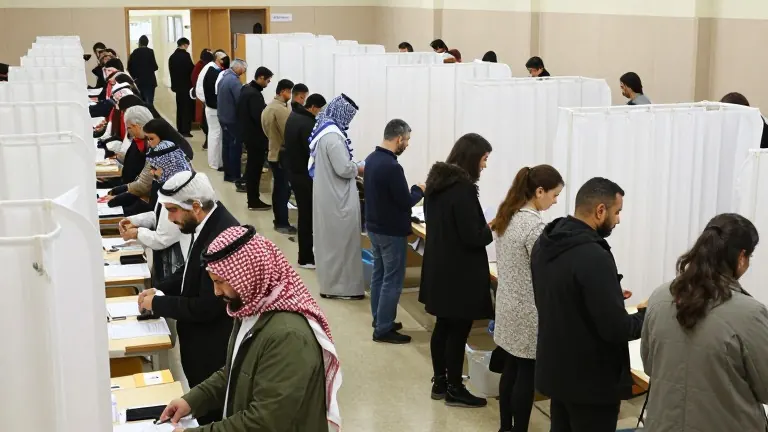
Maryland voters will decide on November 3 whether to redraw congressional district lines, a move that could shift the state’s political balance by a single seat.
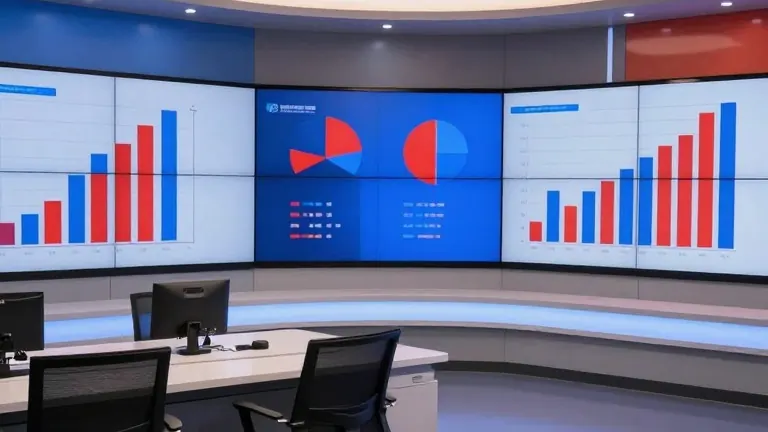
A University of Maryland, Baltimore County poll released this month indicates that 53% of likely voters plan to reject Question 3. The opposition cuts across party lines, with 42% of Democrats, 74% of Republicans, and 59% of unaffiliated voters intending to vote no. Mileah Kromer, director of the UMBC Institute of Politics, noted that many voters question the wisdom of favoring one party over another through mid-decade map changes.
The measure seeks to remove the constitutional requirement that congressional districts respect natural boundaries, such as the Chesapeake Bay. This change would allow state leaders to consolidate districts in a way that favors Democrats. Currently, Maryland holds a 7-1 Democratic advantage in the U.S. House. If Question 3 passes, the state could move to an 8-0 split, eliminating the district represented by Republican Andy Harris on the Eastern Shore.
The push for a new map was initially stalled by Senate President Bill Ferguson, a Democrat who argued the effort lacked sufficient support in the chamber. Ferguson cited a 2021 attempt to redraw lines that was struck down by a state judge in 2022. In August, legislators voted overwhelmingly to place the constitutional amendment before voters after a legal challenge led the state Supreme Court to approve a rewritten version of the question.
Governor Wes Moore’s campaign has intensified its advertising efforts to overcome the polling deficit. AdImpact data shows that the group Fight Back MD has spent $550,000 on television ads supporting the measure so far this month. Moore’s campaign recently shifted its own budget away from his re-election bid, deploying $700,000 for a commercial featuring state Democratic leaders and an additional $500,000 for a spot starring former President Barack Obama.
Internal friction remains within the state Democratic party. Ferguson, who helped pass the measure in August, has not committed to using the new authority to redraw maps during the next legislative session. David Schuhlein, Ferguson’s communications director, stated that the president is focused on retaining state Senate seats and gaining one or two more districts. One operative familiar with the pro-Question 3 campaign said some donors have hesitated to give because of Ferguson’s reluctance to guarantee new maps.
The outcome of this ballot question carries implications beyond Maryland’s borders. Moore has been the subject of speculation regarding a potential 2028 presidential run. In a recent debate, he told moderators that he would not seek re-election if he were not committed to the people of Maryland, though he did not explicitly rule out a future bid for the presidency. Republicans have used the redistricting effort to argue that Moore is seeking a political trophy for a White House run.
Michael Hanmer, director of the Center for Democracy and Civic Engagement at the University of Maryland, suggested that a failure to pass the measure could become a talking point in future primary contests. He predicted that if other governors succeed in redistricting and Moore does not, opponents may use the discrepancy to question his political effectiveness. Hanmer noted that while policy gaps between potential candidates are narrowing, control over state legislative power is emerging as a distinct differentiator.
The national context for this fight involves a wave of mid-decade redistricting efforts. Texas successfully redrew its maps to boost Republican candidates in five seats last year, while California passed a similar measure to gain advantages in five seats. Maryland’s vote is the next major test of whether voters in a deep blue state will accept a one-seat gain in exchange for departing from traditional geographic boundaries.
Source: NBC News