Service Dog: Marine Uses Goldendoodle to Regain Daily Independence
A St. Louis veteran with multiple injuries relies on a trained dog to perform physical tasks and manage the psychological effects of his service.
By Anthony Hoffmann ·
James Poggi, a former Marine Corps aviator, relies on a Goldendoodle named Teddy to perform daily tasks that require physical mobility. Poggi, who stands six feet three inches tall, underwent five back surgeries and a below-the-knee amputation during his active service. He now uses wheelchairs, walkers, and other mobility devices to move around.
"You go from being six foot three, 250 pounds and able to travel halfway across the world and do whatever they ask you to do, to being relying on wheelchairs, walkers, mobility devices, things like that, you become a vulnerable person that you never thought you’d be," Poggi said. He attributed his physical deterioration to multiple accidents, hard landings, physical therapy incidents, a car crash, and a diagnosis of spinal meningitis.
Poggi’s wife, who serves as his caregiver, suggested the service dog to address the emotional toll of his condition. Teddy assists Poggi by retrieving dropped items, carrying objects, and fetching his cell phone. Poggi described the dog as a "battle buddy" who always has his back. He noted that while he loves his children, the bond with Teddy is comparable to the relationship he has with a child.
Teddy was trained at Dog Training Elite St. Louis. The facility prepares dogs for basic obedience as well as advanced therapy, protection, and service work. Poggi said the training environment simulates real-world scenarios that are not found in standard training manuals. "The way DTE trains, it looks like a facility, but they turn this thing into like a real-world scenario," Poggi said. "They prepare you and your service animal for real world experiences that you just you’re not going to get out of that book."
Matt Willis, the owner of Dog Training Elite St. Louis, stated that service dogs assist veterans by addressing both physical limitations and post-traumatic stress disorder. Willis explained that the interaction with the dog causes chemical changes in the body that provide an uplift for military personnel. "Dogs just-they change your feeling, the chemical changes in your body with that interaction. And that’s exactly the uplift that these guys and ladies need," Willis said. He acknowledged that while the government attempts to provide care, gaps remain in the support system for veterans who have experienced physical, emotional, and mental trauma.
A private donor grant will cover 30% of the training costs for 10 veterans or active military members. Willis said the grant was designed to help military personnel obtain service dog training. "So what we’ve done is divide that money up to where we are able to help 10 veterans in need. Can be active military or veterans. And so it basically pays 30% of their training costs for those 10 veterans," Willis said. He noted that private donors see the benefit of these dogs in supporting service members.
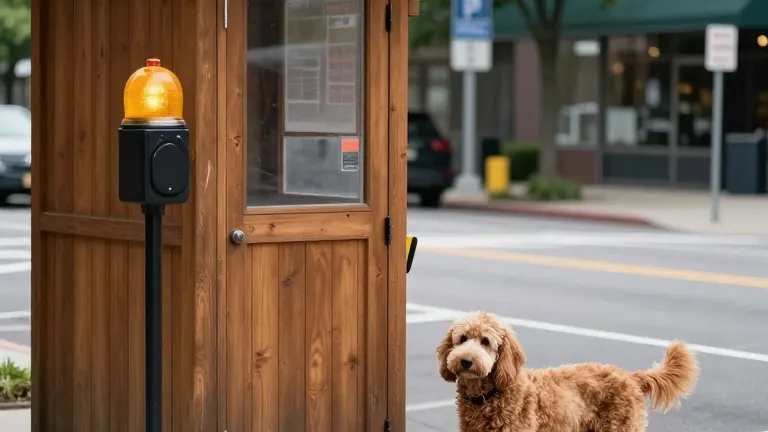
Teddy will return to work with Poggi, who is resuming his position as a school crossing guard in Mascoutah. Poggi plans to work full-time next school year, standing on the corner in all weather conditions with the dog by his side. "Next school year, I’ll be back full-time out on the corner every day, rain or shine. He’s out there with me. He’s got the got a little crossing guard hut and everything," Poggi said.
A 2024 study found that service dogs are associated with lower rates of anxiety and depression in veterans with PTSD. A separate 2024 survey of approximately 600 veterans revealed that about 40% had never had a PTSD service dog but expressed a desire for one. The Department of Veterans Affairs does not currently provide service dogs for mental health conditions, including PTSD, and is still studying the potential benefits of such interventions.
Source: WALA-TV