Southeast voters weigh tariffs, prices in tight Senate races
AP-NORC data shows economic anxiety driving turnout in Georgia, North Carolina, and Florida as polls remain open.
By Beatriz Bailey ·
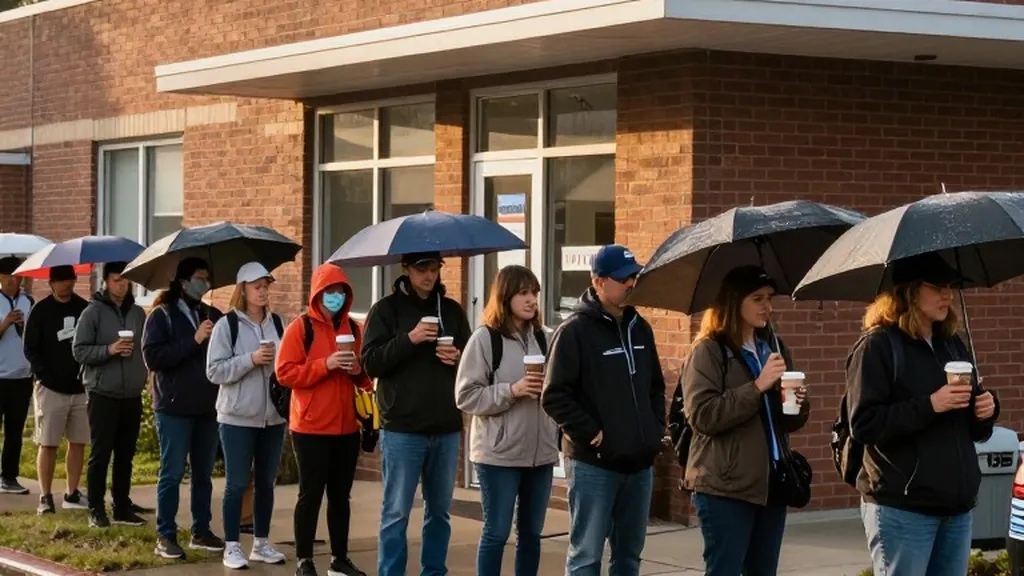
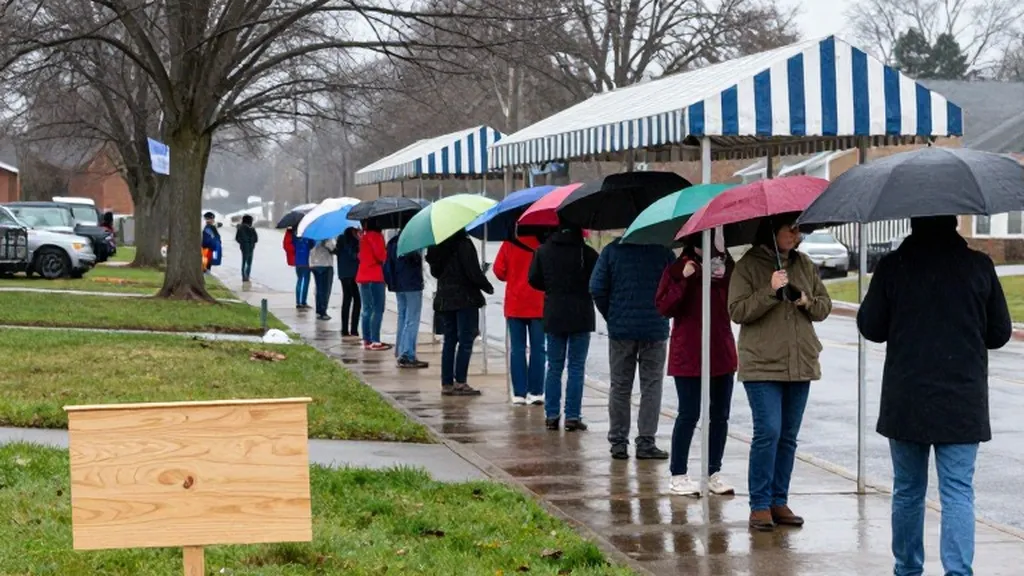
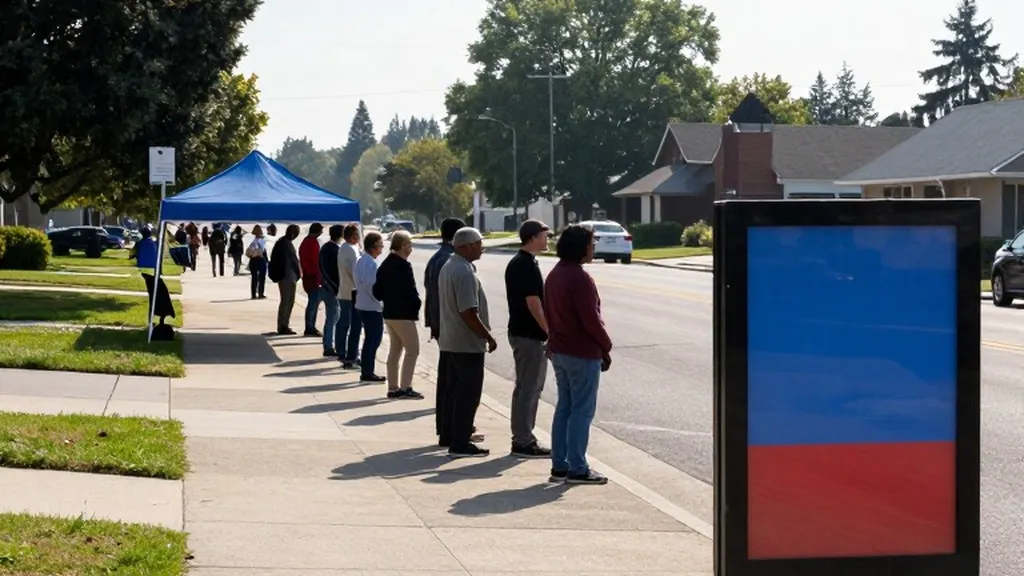
Voters across the Southeast began casting ballots on Tuesday, November 3, 2026, in a midterm election that is shaping up to be a referendum on the cost of living. The Associated Press describes the national mood as one where citizens are struggling with high prices and are angry over an unpopular war with Iran. In this region, economic concerns are taking center stage as voters decide who will control Congress for the final two years of President Donald Trump's second term. Polls in Georgia, Florida, and North Carolina opened in the early morning, with lines forming before sunrise in several urban centers. The stakes are high, as a net gain of four Senate seats is required for Democrats to seize the upper chamber, while Republicans can afford to lose only two.
According to AP-NORC polling, 35 percent of U.S. adults approve of President Trump's job performance, but only 25 percent approve of his handling of the economy. About seven in 10 Americans say the country is heading in the wrong direction, and most of those voters blame the president for high prices. This economic strain is particularly acute in the Southeast, where inflation has outpaced wage growth in several key battleground states. The AP notes that Republicans are bracing to lose the House and are fighting hard to hold the Senate. Democrats, meanwhile, are described as cautiously optimistic, relying on the anger of voters who feel the current administration has not delivered on economic promises.
In Georgia, voters are deciding the fate of a Senate seat currently held by Democrat Jon Ossoff. The state polls open at 7 a.m. and close at 7 p.m. local time. Sen. Ossoff faces Republican Rep. Mike Collins in a race that the AP rates as leaning to likely Democratic. The state voted for Trump by a margin of 2.2 points in the 2024 presidential election, making it a critical target for Democrats. The race is part of a broader pattern where economic issues are driving voter turnout, with more than 57 million people having already voted by Monday, surpassing early vote totals from four years ago in many closely watched states.
North Carolina presents another key economic battleground, with an open Senate seat following the retirement of Thom Tillis. Polls in the state open at 6:30 a.m. and close at 7:30 p.m. Democrat Roy Cooper, a former governor, is challenging Republican Michael Whatley, a former Republican National Committee chair. The AP highlights that North Carolina is one of six states using new congressional maps after mid-decade redistricting. These new maps may alter the dynamics of the race, as districts that previously voted Republican may now lean Democratic, or vice versa. The state voted for Trump by 3.3 points in 2024, making it a toss-up or lean Democratic race according to various ratings.
Florida, with no Senate race on the ballot, is still a major focus for governors and House seats. Polls open at 7 a.m. and close at 7 p.m. The state is using a new congressional map, which has drawn attention from both parties. The AP calls the governor race competitive, with Republicans defending a seat in a state that Trump won by 13.1 points in 2024. Voters in Florida are also weighing the impact of tariffs on local businesses and consumer goods. The state has seen significant growth in recent years, but that growth has been accompanied by rising costs for housing and healthcare, issues that are top of mind for many voters.
Voter Mark Barker of Palm Beach Gardens, Florida, told the AP that he has been following Trump the whole time and really thinks he is doing an awesome job. Barker represents a segment of the electorate that remains loyal to the president despite economic concerns. In contrast, James Moore, a 57-year-old librarian in Raleigh, North Carolina, said he is paying more taxes, more for healthcare, and more for everything. Moore's comments reflect the frustration felt by many voters in the region who feel the cost of living has become unmanageable. These personal anecdotes underscore the national trend where economic approval is a key driver of voter behavior.
The AP notes that President Trump held dozens of rallies in the days leading up to the election, ending Sunday in Salina, Kansas. He told voters there, "I really want you to pretend I'm on the ballot." His schedule included stops in Mississippi, South Carolina, and Texas. Many Republican candidates kept their distance from the president in the final days, a strategy that reflects the complex relationship between the White House and the party's congressional candidates. Trump has continued to make claims about voting fraud, including that noncitizens vote in large numbers, which has added to the tension in election administration.
Money is playing a significant role in the 2026 elections, which are likely to be the most expensive in history. Republican committees outraised and outspent Democratic committees, helped by Trump-affiliated groups and Elon Musk. However, at the candidate level, Democrats outraised their opponents. According to AP analysis of AdImpact data, 88.1 percent of Republican general election TV ad spending went to states and districts Trump won in 2024. This spending pattern suggests that Republicans are focusing on consolidating their base rather than flipping key districts, a strategy that may pay off in the long run but poses risks in the short term.
In the Southeast, the impact of tariffs is a major talking point. The AP notes that economic strain and tariffs have made states like Maine competitive, and similar dynamics are at play in the South. Voters are concerned about the cost of imported goods and the potential for retaliatory tariffs to hurt local industries. The U.S. Postal Service added hours, staff, and special lines to ensure that mail ballots are counted on time, a move that is particularly important in states like North Carolina and Georgia where mail-in voting is a significant part of the process.