Active military officers guarded Cambodian fraud hubs
A new investigation links more than 20 uniformed officials to private security firms that enforced confinement at scam compounds.
By Noah Ross ·
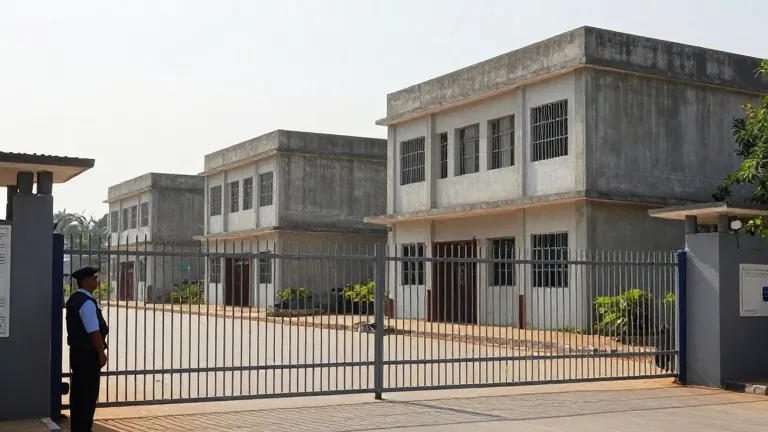
More than 20 members of the Cambodian military and police were identified working as private security guards at scam compounds, according to a report published by Amnesty International. The investigation reveals that uniformed officials, some with active service status, helped maintain the sites where thousands of people were forced into online fraud.
The rights group conducted its analysis using 151 interviews with survivors, site visits to 82 compounds, and social media videos. These records allowed Amnesty to connect illicit operations to five private security companies. The report states that the guards controlled exits, pursued escapees, and enforced discipline through violence, including beatings and electric shocks. Survivors described being held in dark rooms while compound managers raped women.
Agnès Callamard, the secretary general of Amnesty International, noted that survivors had described seeing military and police figures inside the compounds for years. She stated that these accounts were difficult to verify until the new evidence emerged. Callamard argued that without the presence of these guards, the system of mass exploitation could not have functioned. She emphasized that the officials used fear and physical force to keep victims confined.
The company with the largest presence in the report is Leap Somnang. It was linked to at least 15 compounds across eight provinces. Twelve survivors identified its guards, uniforms, or logo. Amnesty alleges that Ban Sophat controlled the company while serving as a colonel in the armed forces. He publicly held the role of chair. The organization supplied photos showing Sophat standing with company guards at two different sites.
Ban Sophat responded to the allegations in a letter quoted by Amnesty. He denied holding any ownership, director, or management position at Leap Somnang. Sophat claimed he served only as an adviser to the company owner. He added that appearing in a photograph at a location did not mean he knew of or participated in the activities there. The company did not respond to requests for comment.
The United Nations estimates that hundreds of thousands of people have been trafficked into south-east Asia for these operations. Victims are often lured by promises of office jobs and then forced to run online scams, such as pig butchering romance frauds. Annual losses from these schemes are estimated at $100 billion. Some parts of the industry are now shifting to South Asia.
Cambodia launched its largest crackdown on scam operations in July 2025. Authorities said they shut down hundreds of centers. The interior ministry told Amnesty that it disciplined 77 police officers and prosecuted six private security guards for using stun batons. The ministry also detained 17 officials for colluding with criminals. A total of 3,477 suspects have been sent to court under a policy of no tolerance, no exemption, and no retreat.
Source: The Guardian