Tesla Opens Optimus Academy to Train Its Robot Fleet
The company is establishing a dedicated facility where its humanoid units will practice tasks to generate the data needed to improve their capabilities.
By Beatriz Bailey ·
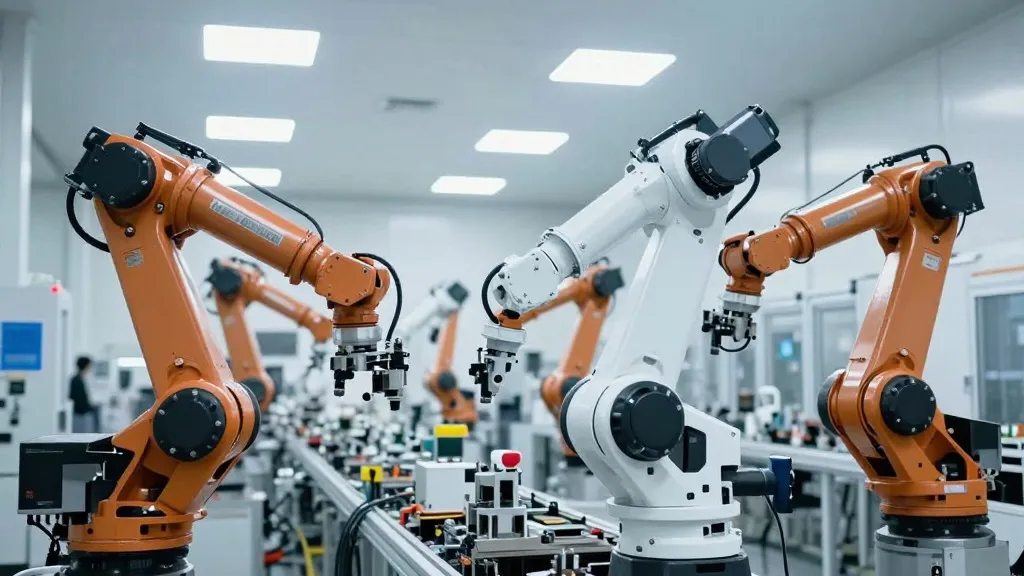
Tesla has begun manufacturing Optimus units on a new high-volume production line, reporting that the robots leaving this facility represent the first hardware built to meet standards suitable for commercial sale. In its third quarter shareholder letter, the company stated that the bots coming off this line are the first production-quality bots manufactured and that it has proven the current manufacturing process for Optimus is suitable for a commercial product. This line occupies space at the Fremont factory that previously assembled the Model S and Model X, which was cleared this past spring to support a manufacturing capacity targeted at one million units annually.
During an earnings call held this week, Elon Musk noted that most of the machinery required for that capacity has already been delivered to Fremont, with production volumes expected to rise toward roughly 20,000 robots per week. Musk characterized the ramp-up as a classic S curve with a shallow slope, indicating that the growth of Optimus follows an S curve but the initial curve is a shallow slope. The company is currently working to refine the robot's artificial intelligence, electromechanical design, reliability, and service life, a process expected to conclude by the end of next year.
To address the need for training data, the company is establishing an Optimus Academy where 10,000 to 20,000 robots will practice a wide range of tasks. Musk explained that a big difference with Optimus versus the cars is that the company does not have a vast fleet from which to gather training data, unlike its automotive division. Consequently, every unit leaving the Fremont line will serve as a source for that training data, which will be fed into the next version of the model. Additionally, plans are in place to integrate the AI5 chip into Optimus next year.
The supply chain for the program is also being developed. In September, the company certified Tuopu, Joyson, and Sanhua as mass production partners for Optimus components. A much larger factory for the robot is under construction at Giga Texas, where the steel frame is nearing completion, and Musk has set a long-term target of 10 million robots a year for that facility. Tesla executives further indicated that Optimus production costs are trending toward the expected manufacturing cost of Cybercab. Current engineering efforts are focused largely on the robot's hands, which remain the most difficult component of the design.
Source: Teslarati · original report published