Tesla Changes Course and Starts Building Its Own Maps
The automaker is developing its own mapping system to improve navigation, parking, and speed limit accuracy for its self-driving software.
By Anthony Hoffmann ·
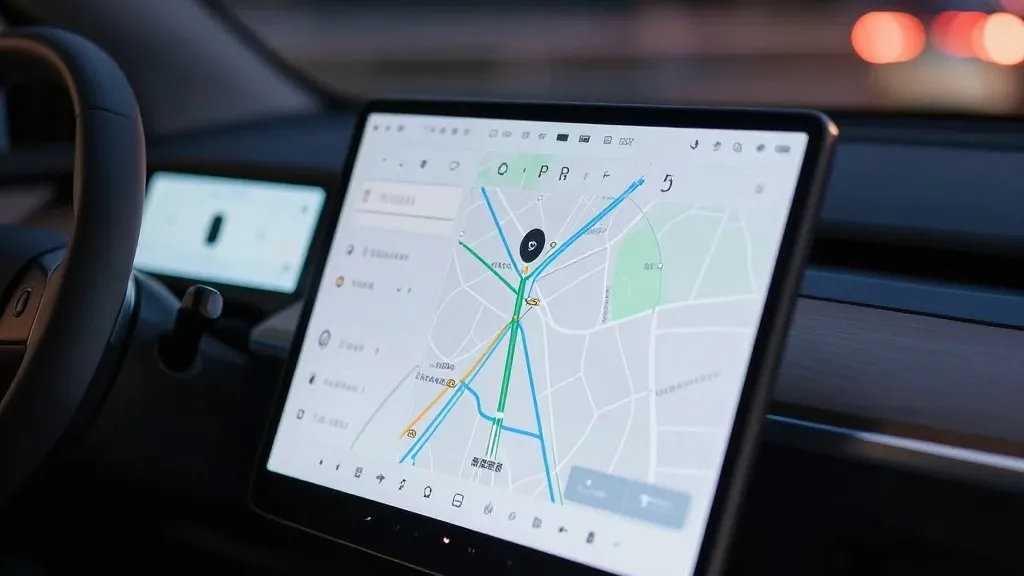
Tesla is now building its own digital maps to fix recurring problems with its Full Self-Driving software. This marks a major shift for a company that has long argued against relying on mapping data for autonomous driving. The announcement came during the company's third quarter earnings call on October 22, 2026.
The discussion arose during a shareholder question regarding persistent issues with speed limits, parking, and route planning. Ashok Elluswamy, Tesla's Vice President of AI, responded that the company will stop depending on third-party mapping services. He stated, "we shouldn't be depending on external people's maps." Elluswamy explained that Tesla is constructing a new AI-based navigation architecture using data collected by its fleet of vehicles. This system will eventually learn individual driver preferences and respond to voice commands.
The rollout for this technology begins with FSD v15, which is scheduled to handle the start and end of trips. In the months following that release, the system will expand to manage navigation, parking, and destination arrival. This development is notable because Tesla has historically dismissed the utility of detailed maps. In 2019, CEO Elon Musk described relying on high-precision lane maps as a "huge mistake" and "a really bad idea" that creates brittle systems.
Despite this history, the company is now creating a map layer powered by its own vehicles to address errors the vision system cannot resolve. This move aligns Tesla's strategy with that of competitors like Waymo, which maps cities using sensor-equipped vehicles before launching service. While Waymo uses lidar sensors for this process, Tesla plans to use data gathered by its camera-equipped fleet.
The primary issues the new maps aim to fix involve understanding road environments. Speed limit accuracy remains a significant challenge for the system. A Belgian road safety group recently found that FSD vehicles exceeded speed limits in 55 percent of 30 km/h zones tested in Brussels. The vehicles averaged 44 km/h in those zones, often because the onboard screen displayed a 50 km/h limit.
In the United States, the National Highway Traffic Safety Administration (NHTSA) is currently considering an investigation into similar reports. The agency is reviewing claims that Tesla Robotaxis speed through active school zones. This inquiry would cover approximately 1,000 Model Y and Cybercab vehicles.
The company is expanding its Robotaxi service city by city within specific geofenced areas. Tesla handles fleet operations within these zones. While Tesla is not currently creating centimeter-level high-definition maps, a system built from millions of cars could eventually evolve toward that level of detail. This approach to mapping contradicts previous statements that dismissed such methods, though using maps is common among serious self-driving programs.
Waymo has operated a driverless service for years using maps built by its own fleet. Tesla is now developing similar technology but has delayed unsupervised FSD for consumer cars until the second quarter of 2027. For now, that capability remains limited to the Robotaxi fleet, which operates inside geofenced areas using maps, a method Musk previously said does not count as a "true self-driving system."
Source: Electrek · original report published